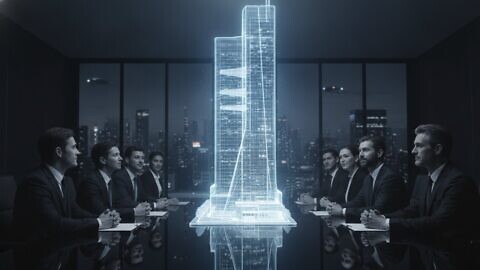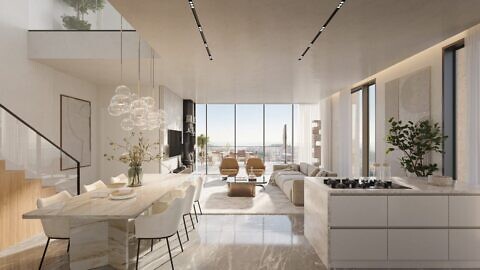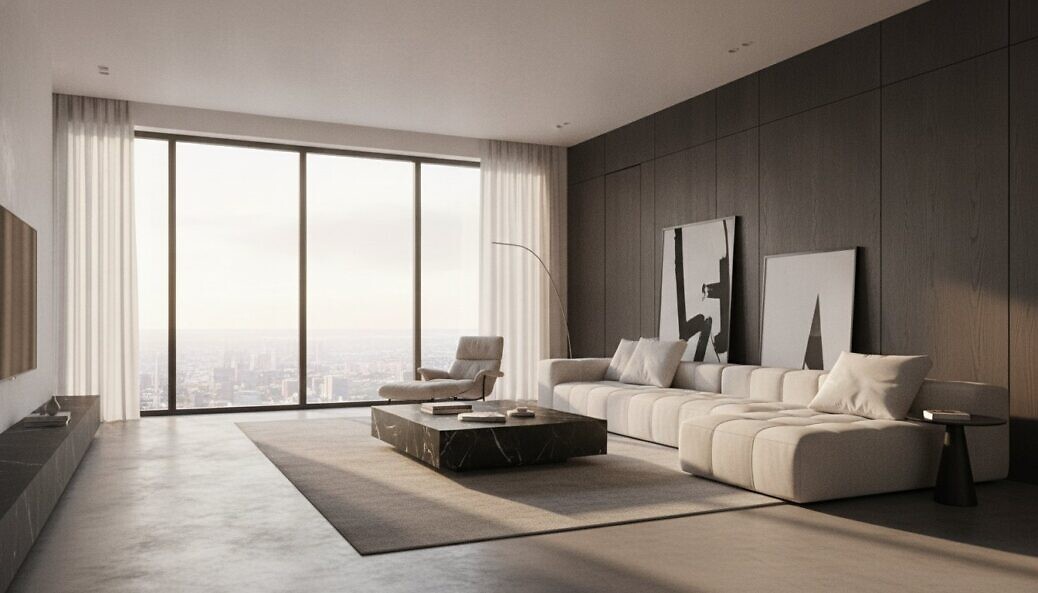
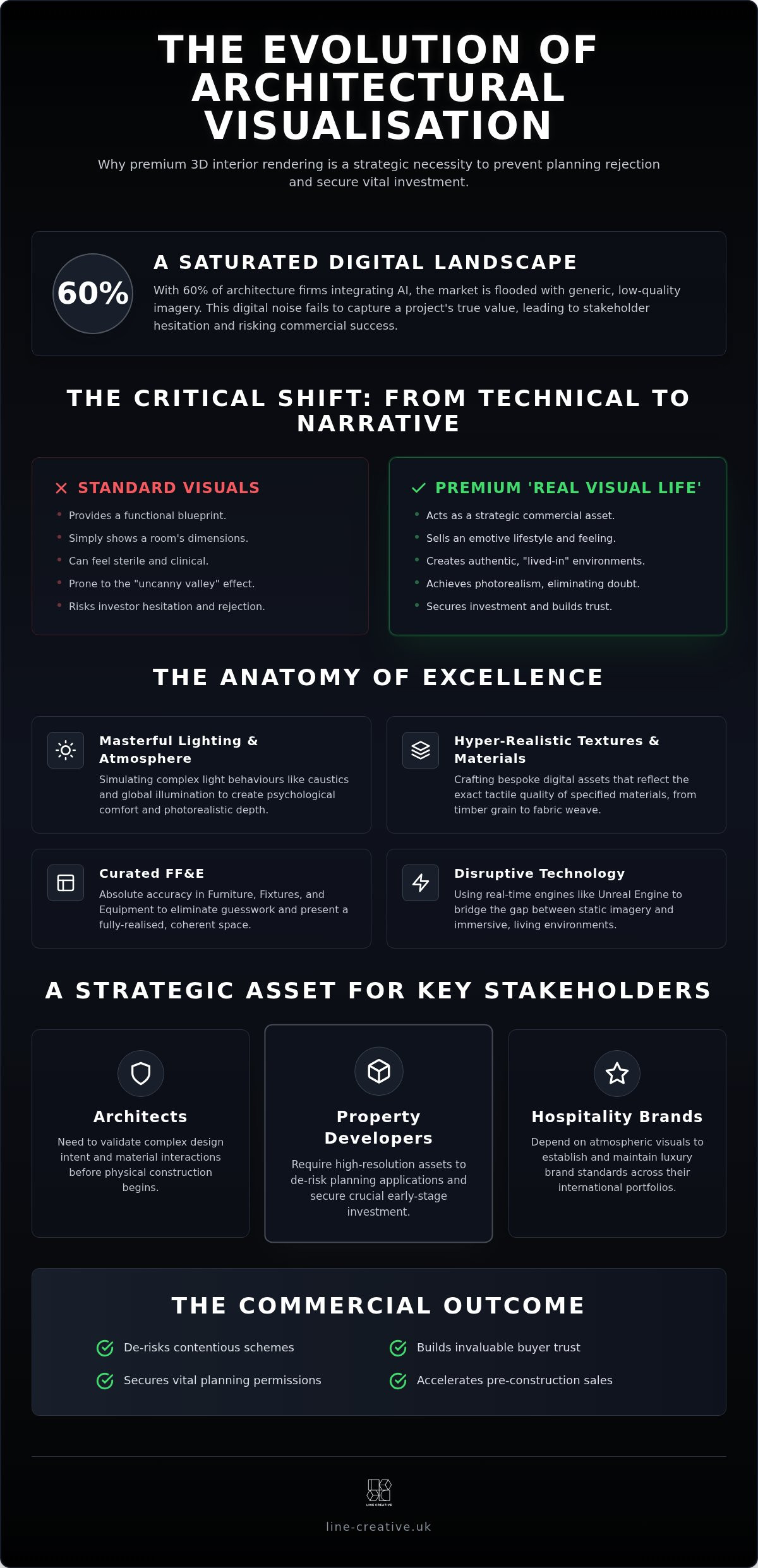
What if the success of a multi-million pound development hinges not on the structural blueprint, but on the emotional resonance of a single image? In an era where 60% of architecture firms have integrated AI into their daily workflows, the digital landscape is saturated with generic, low-quality imagery that fails to capture the true gravity of a space. Selecting premium 3D interior rendering services is no longer a luxury for high-end projects; it’s a strategic necessity to prevent planning rejection and cut through the noise of digital information overload.
You understand that a space is more than its physical dimensions. It’s a feeling, a texture, and a lifestyle that must be sold to stakeholders long before the first brick is laid. This guide explores how sophisticated, photorealistic visuals act as an essential safeguard for your commercial success. We’ll examine the methodology behind award-winning visual narratives, the impact of real-time rendering technologies, and how the right strategic partner can accelerate property sales whilst securing the vital investment your architectural vision deserves.
Key Takeaways
- Understand how to move beyond basic CAD models by synthesising architectural precision with narrative-driven digital storytelling to create emotionally resonant environments.
- Explore how disruptive technologies like Unreal Engine and creative flair distinguish high-end 3D interior rendering services from standard, technical CGI.
- Discover the commercial methodology for using photorealistic visuals to de-risk contentious mixed-use schemes and secure vital planning permissions.
- Learn how premium interior visualisations build buyer trust and accelerate pre-construction sales through immersive, high-resolution narratives.
- Identify the essential criteria for selecting a strategic CGI partner who understands the psychological impact of imagery on high-stakes decision-making.
Defining 3D Interior Rendering Services in a High-Stakes Market
In the high-stakes environment of 2026, 3D interior rendering services have evolved far beyond mere digital drafting. They represent a sophisticated synthesis of architectural precision and emotive storytelling. Whilst traditional Architectural illustration provided a functional blueprint, modern CGI acts as a strategic asset for architects, developers, and luxury hospitality brands. It’s the difference between showing a room and selling a lifestyle. Standard visuals often fail to communicate the complexity of high-value schemes, leaving developers vulnerable to planning rejection or investor hesitation.
Success in this market requires a deep understanding of who the imagery serves. The core stakeholders each have distinct needs that must be met through visual communication:
- Architects: Need to validate complex design intent and material interactions before physical samples are ordered.
- Property Developers: Require high-resolution assets to de-risk planning applications and secure early-stage investment.
- Hospitality Brands: Depend on atmospheric visuals to establish luxury brand standards across international portfolios.
Beyond Static Imagery: The Strategic Narrative
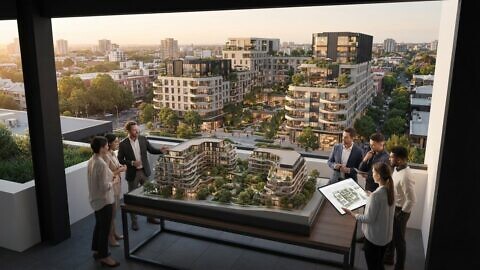
A premium render communicates the “soul” of a project before construction begins. It aligns disparate stakeholder visions by providing a singular, definitive version of the truth. We call this “Real Visual Life”. It isn’t just about pixels; it’s about market authority. By visualising the emotional atmosphere of a space—a concept reflected in the evocative watercolour art of Manjachen Studio—developers can secure early-stage investment and build public trust. This narrative approach transforms a technical requirement into a powerful tool for visual communication, ensuring every stakeholder sees the same finished masterpiece.
The Anatomy of Premium Interior CGI
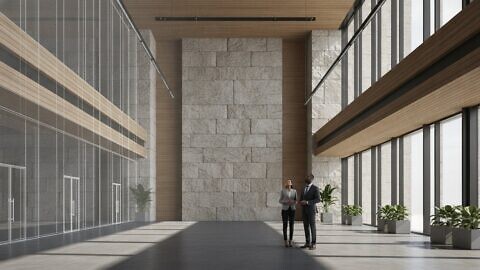
Excellence in 3D interior rendering services is found in the microscopic details. It requires absolute accuracy in lighting, texture, and FF&E (Furniture, Fixtures, and Equipment). When these elements are handled with technical mastery, they eliminate the “uncanny valley” effect that often plagues lower-quality architectural marketing. High-resolution output ensures that every fabric weave and light refraction looks entirely real. You can see the impact of this precision in Line Creative’s portfolio, where technical capabilities meet commercial outcomes. This level of detail is the essential safeguard against project failure in a competitive digital landscape.
The Technical Sophistication of Award-Winning Interior Rendering
The industry has reached a pivotal junction where technical capability alone is insufficient. Award-winning 3D interior rendering services now rely on disruptive technologies like Unreal Engine to bridge the gap between static imagery and living environments. This shift from traditional, slow-burn rendering to real-time engines allows for a level of digital materialisation that was previously impossible. We don’t just build models; we craft bespoke assets that reflect the exact tactile quality of specified materials, from the grain of a hand-charred timber to the subtle weave of a bespoke linen.
Masterful Lighting and Atmospheric Depth
Light is the most powerful tool in the artist’s arsenal. By simulating complex physical behaviours like caustics and global illumination, we create a sense of psychological comfort and realism within a digital space. This isn’t merely about visibility; it’s about using creative-flair to enhance the narrative mood of commercial and residential interiors. Photorealistic lighting is the definitive safeguard that influences investor confidence by proving the design’s viability in real-world conditions. If you’re looking to elevate your next project, you might consider how specialist architectural rendering transforms these technical details into commercial value.
Immersive Motion: From Stills to Animation
Static images provide a snapshot, but architectural walkthrough animation offers a journey. Navigating complex floor plans requires a fluid, cinematic approach that guides the viewer through the spatial logic of a development. The CGarchitect 3D Award for Unreal Studio Experience films serves as the gold standard for this type of innovation. It marks the transition from simple fly-throughs to sophisticated storytelling that captures the gravity of luxury hospitality and mixed-use schemes. For a deeper understanding of this medium, read The Authority’s Guide to Choosing a CGI Animation Studio in 2026 to see how motion de-risks high-value schemes.
Optimising ROI: How Interior Visuals Drive Planning and Sales
High-stakes property development demands more than just aesthetic appeal; it requires a calculated approach to capital allocation. Premium 3D interior rendering services act as a definitive safeguard for your investment by converting abstract architectural concepts into tangible, high-value assets. This transformation is critical for securing the confidence of both planning committees and high-net-worth investors. With the global 3D rendering market projected to reach a value of $5.23 billion by the end of 2026, the ability to produce high-resolution, photorealistic imagery is now the baseline for commercial survival.
The financial logic is clear. By investing in sophisticated visuals early, developers can identify design conflicts and material inconsistencies before they manifest as costly on-site revisions. This proactive methodology ensures that the final output is not just a picture, but a strategic tool designed to accelerate property sales and de-risk the entire development lifecycle.
Securing Planning Approval with Precision
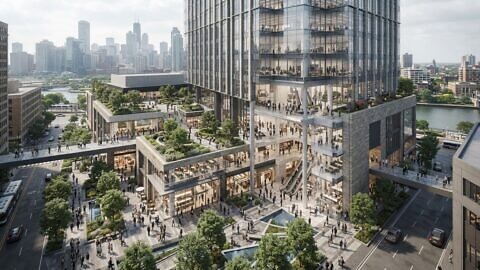
Contentious mixed-use schemes often stall due to a lack of clarity regarding their impact on the existing built environment. Visualisation for Planning serves as a precise tool to mitigate these risks. By providing local authorities with accurate, high-resolution imagery, developers can address objections regarding scale and atmosphere before they become roadblocks. This level of transparency is essential for navigating modern regulatory landscapes. You can explore this methodology in depth by reading our sibling article on Using Bespoke CGI to Accelerate Property Schemes in 2026.
Accelerating Property Sales and Marketing
Selling off-plan relies entirely on the psychological impact of the visual narrative. If a potential buyer cannot “feel” the texture of a room or the warmth of the lighting, the emotional connection is lost. Photorealistic interiors build immediate trust, allowing developers to launch high-impact marketing campaigns that establish market authority instantly. This is particularly vital for luxury hospitality brands where the “experience” must be sold long before the doors open.
Beyond buyer trust, the financial benefits are substantial. High-resolution CGI reduces the necessity for physical show homes, which often require significant capital, staffing, and maintenance. Developers who integrate 3D animation for real estate marketing into their campaigns can further amplify these advantages, creating cinematic narratives that drive off-plan sales and attract international investment. By utilising digital environments for advertising and brand communication across the built environment, developers can reallocate those funds into higher-margin activities. To ensure your development stands out, you should secure your project’s commercial future with professional 3D rendering that commands respect and drives results.
Selecting a Strategic Partner for Your Interior Visuals
Selecting 3D interior rendering services for a high-value scheme is a high-stakes decision that extends far beyond technical capability. In a market saturated with low-quality CGI, the definitive differentiator is a studio’s ability to act as a strategic partner rather than a mere vendor. This partnership is the essential safeguard against the risks of planning rejection and investor apathy. You need a visionary team that understands the gravity of your architectural narrative and possesses the technical pedigree to deliver excellence, clarity, and precision.
The value of working with a studio trusted by elite firms like Zaha Hadid Architects and Aman Resorts cannot be overstated. These collaborations prove a studio’s ability to handle complex, luxury hospitality projects where the stakes are highest. The workflow from the initial architectural concept to the final “visual life” delivery is a methodical journey. It involves deep design analysis, digital materialisation, and atmospheric refinement to ensure the finished product is a powerful tool for story-driven visual communication.
Evaluating Technical Pedigree and Awards
Industry recognition is the most reliable metric for assessing a studio’s reliability and innovation. Awards such as the CGarchitect 3D Award and the SME UK awards are critical indicators that a studio operates at the leading edge of emerging technologies. A global reach is equally vital, providing the stability and scale required to support international property developments whilst maintaining a consistent, high-resolution aesthetic. Line Creative is an award-winning international studio recognised for its ability to transform ambitious architectural visions into commercial success stories.
The Collaborative Path to Excellence
True excellence is born from joint creativity. This collaborative culture ensures that the final visual output aligns perfectly with your wider marketing and planning strategy. By integrating CGI into the project lifecycle early, you create a cohesive narrative that resonates with stakeholders and accelerates sales. It is a pragmatic, results-oriented mindset that prioritises your commercial success as much as artistic perfection. To begin de-risking your next project, contact Line Creative to discuss your next high-value architectural scheme and secure the visual authority your vision deserves.
Securing the Future of Architectural Innovation
High-value schemes demand a level of visual authority that commodity CGI simply cannot provide. We’ve explored how technical mastery and story-driven communication transform abstract concepts into definitive commercial realities. By leveraging premium 3D interior rendering services that prioritise narrative depth and photorealistic precision, developers can effectively de-risk planning applications whilst securing the vital investment necessary for success. This isn’t merely about aesthetics; it’s about establishing market authority in a saturated digital landscape.
Line Creative stands as a multiple CGarchitect Award winner, trusted by industry leaders like Zaha Hadid Architects and Olson Kundig to handle the most complex mixed-use developments. We understand that your project’s success relies on more than just high-resolution pixels; it requires a strategic partner dedicated to your long-term commercial outcome and architectural integrity. Our expertise serves as the essential safeguard against project failure, ensuring every stakeholder sees the finished masterpiece exactly as intended.
Partner with an award-winning CGI studio for your next project and ensure your architectural vision receives the excellence it deserves. Your vision is extraordinary; it’s time the world saw it with absolute clarity and conviction.
Frequently Asked Questions
What is the typical timeline for 3D interior rendering services for a complex scheme?
The typical timeline for 3D interior rendering services on a complex scheme generally ranges from two to four weeks for initial high-resolution drafts. For luxury hospitality or intricate mixed-use developments, bespoke asset creation and atmospheric lighting adjustments may extend this period. We prioritise precision over speed, ensuring every texture and light refraction is perfect. A methodical approach allows for stakeholder feedback cycles, ensuring the final visual narrative aligns with your commercial objectives.
How does photorealistic interior rendering help in winning planning permission?
Photorealistic interior rendering mitigates planning risks by providing local authorities with absolute clarity on a project’s scale, material quality, and atmospheric impact. Accurate visuals address potential objections early, demonstrating how a development integrates with the existing built environment. By presenting a definitive version of the truth, you eliminate ambiguity. This transparency builds trust with planning committees, often accelerating the approval process for contentious or high-profile schemes where public perception is critical.
Can 3D interior renders be used for marketing before a property is built?
Utilising 3D renders for marketing is a strategic necessity for securing off-plan sales and pre-construction investment. High-resolution imagery allows potential buyers to inhabit a space emotionally long before the first brick is laid. These assets create instant market authority, allowing you to launch comprehensive advertising campaigns across digital and physical platforms. By visualising the soul of the development, you build buyer trust and generate a sense of urgency that physical show homes cannot match.
What information does a CGI studio need to begin an interior rendering project?
A professional CGI studio providing 3D interior rendering services requires comprehensive technical data to ensure architectural precision. This includes BIM or CAD files, detailed material specifications, and an FF&E schedule. To capture the emotional atmosphere, mood boards and lighting references are equally vital. Providing high-quality information at the outset allows us to focus on story-driven visual communication. This foundation ensures that the final renders aren’t just technically accurate, but also commercially compelling.
Is there a difference between basic CGI and award-winning architectural visualisation?
Basic CGI often results in clinical, sterile imagery that lacks the narrative depth required for high-stakes developments. Award-winning architectural visualisation synthesises technical excellence with creative flair and disruptive technologies like Unreal Engine. These premium visuals avoid the uncanny valley effect by meticulously simulating real-world light behaviour and tactile textures. The difference lies in the psychological impact; award-winning imagery moves beyond simple representation to create an emotionally resonant environment that drives high-level investment.
How do 3D interior walkthroughs differ from static renders in terms of ROI?
3D interior walkthroughs provide a higher ROI by offering an immersive journey through the spatial logic of a building. Whilst static renders provide high-impact snapshots, animations allow stakeholders to understand the flow and scale of a development in real-time. This immersive experience is particularly effective for luxury hospitality projects, where the atmosphere is a primary selling point. For developers seeking to maximise this advantage, a comprehensive understanding of 3D animation for real estate marketing reveals how cinematic storytelling secures higher levels of buyer commitment. By guiding viewers through a curated narrative, walkthroughs accelerate decision-making and secure higher levels of buyer commitment.