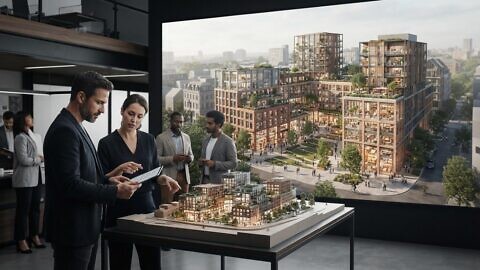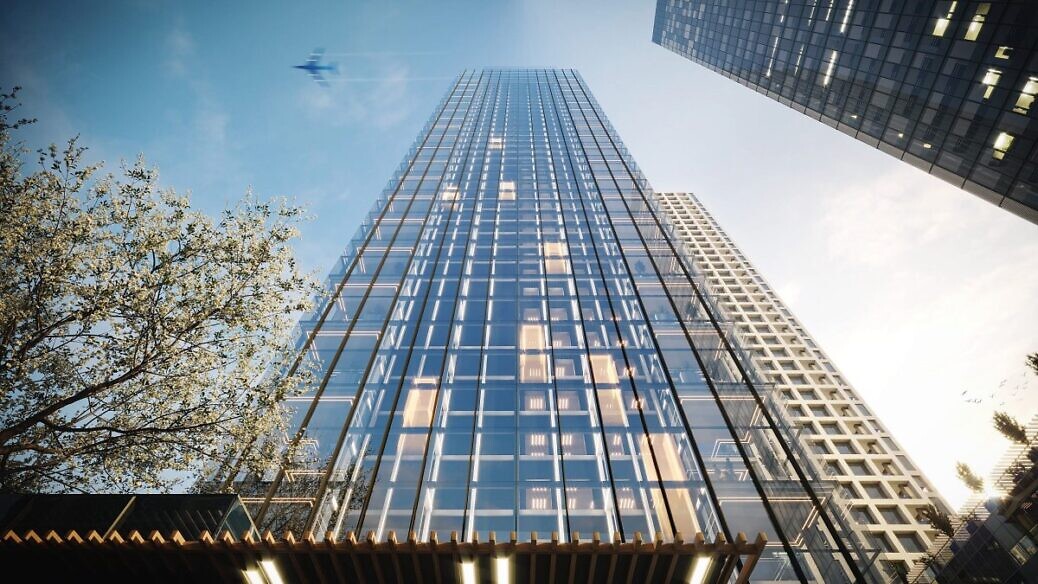
In a digital landscape defined by relentless information overload, a static floor plan isn’t just insufficient; it’s a commercial liability that invites investor hesitation. You know that bridging the gap between a complex, technical visualisation and a non-technical stakeholder’s confidence requires more than just a sketch. It demands a visual narrative that is precise, evocative, and uncompromising. By integrating high-fidelity 3D rendering for marketing, you transform abstract concepts into tangible, high-conversion assets that command attention and dictate market value.
We agree that the traditional costs of photography for unbuilt environments are prohibitive and the stakes of failing to communicate your vision are far too high. This strategic guide promises to reveal how elite CGI serves as the definitive safeguard against project stagnation. You’ll discover a clear framework for pre-build marketing, learn to foster absolute investor certainty, and build a library of versatile, immersive, and high-fidelity assets that ensure your project stands as a beacon of excellence whilst others struggle for relevance.
Key Takeaways
- Master the transition from basic visualisation to high-stakes valuation by positioning 3D rendering for marketing as your project’s primary narrative engine.
- Discover how photorealistic textures and precision lighting narrow the “trust gap” to secure absolute investor confidence in unbuilt environments.
- Optimise your commercial ROI by deploying versatile 3D assets across multi-channel digital campaigns and immersive social media platforms.
- Identify the hallmarks of a strategic CGI partner capable of aligning technical excellence with your specific long-term business outcomes.
From Visualisation to Valuation: The Evolution of 3D Rendering for Marketing
The industry has undergone a seismic shift. We’ve moved past simple sketches into an era where high-fidelity visuals dictate the commercial trajectory of a project. 3D rendering for marketing is no longer just a supplementary visual aid; it’s a strategic pillar of project valuation. By leveraging sophisticated computer graphics rendering techniques, developers can establish market authority months, or even years, before the first stone is laid. Traditional photography is bound by the physical world, limited by weather, construction schedules, and static environments. In contrast, CGI offers infinite, surgical precision. It allows us to control every shadow, texture, and atmospheric detail to create a narrative that is meticulous, immersive, and persuasive.
The Pre-Build Advantage in Property Marketing
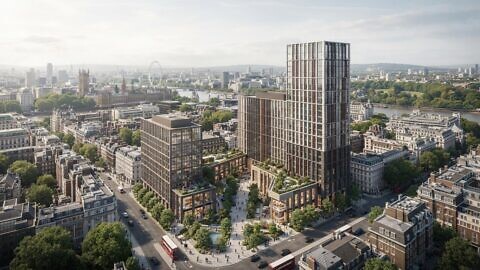
Securing off-plan sales requires more than a promise. It requires an emotional connection. High-end photorealistic architectural renders bridge the gap between technical architectural intent and raw buyer desire. They provide a window into a future lifestyle that feels immediate, tangible, and certain. This clarity is essential for reducing the perceived risk for investors. When a stakeholder can see the exact quality of light in a penthouse or the precise grain of timber in a commercial lobby, the trust gap closes. You aren’t just selling space; you’re selling a realised vision that commands a premium. For residential schemes specifically, off-plan property visualisation has become a non-negotiable strategic safeguard that secures planning approvals and attracts elite investors before a single foundation is laid.
The Cost-Effectiveness of Digital Versatility
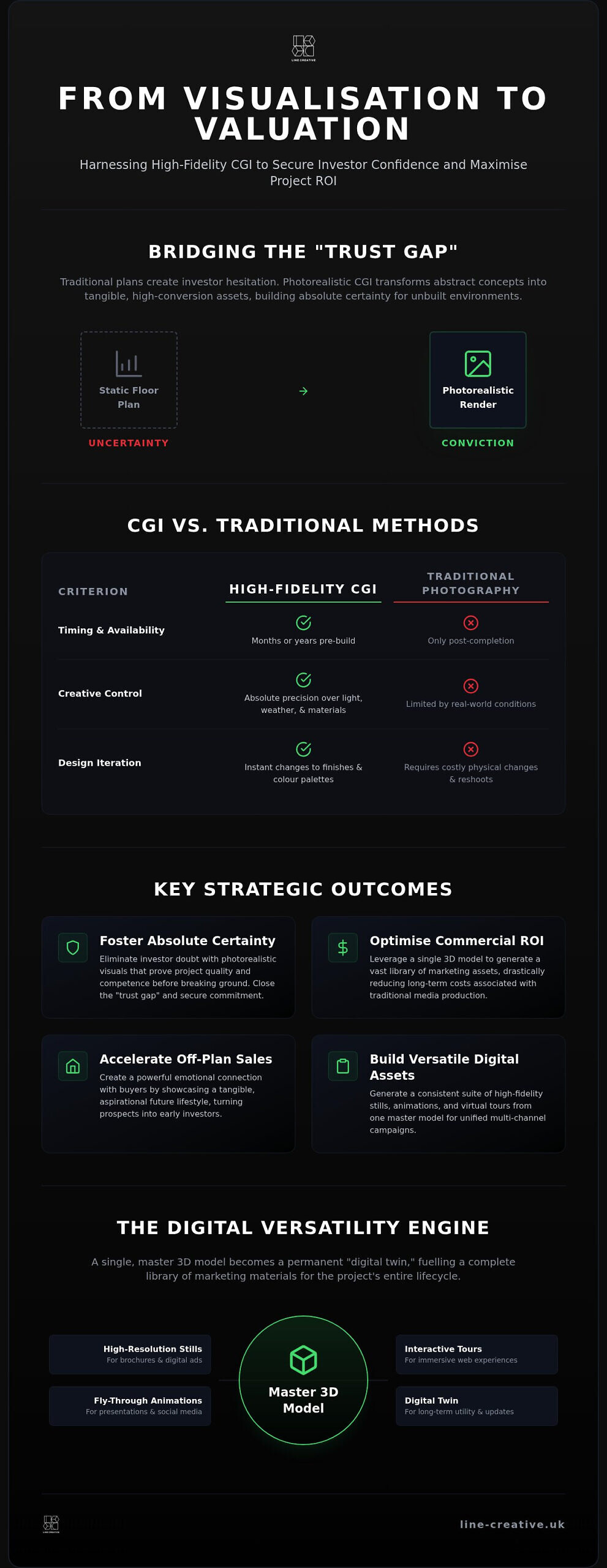
Efficiency is the byproduct of digital excellence. A single master 3D model can generate a vast library of assets that would require dozens of physical photoshoots to replicate. This digital versatility allows developers to maintain a consistent, high-stakes brand presence without the logistical overhead of traditional media. Consider the strategic benefits of this approach:
- Design Iteration: You can test different colour palettes and material finishes instantly based on real-time market feedback.
- Multi-Channel Consistency: One model produces high-resolution stills, fly-through animations, and interactive tours for a unified campaign.
- Long-Term Utility: The “digital twin” of the project remains a permanent asset, easily updated as the scheme evolves or enters new phases.
It’s a pragmatic, results-oriented methodology. Instead of the logistical nightmare of organising site photography, you have a controlled, aesthetic, and evolving environment that serves your commercial objectives from inception to completion.
The Psychological Impact of Photorealistic Rendering on High-Value Decisions
High-value investment decisions depend on the elimination of uncertainty. In the context of unbuilt architecture, this “trust gap” is the primary barrier to capital commitment. 3D rendering for marketing operates at a subconscious level to dismantle this hesitation. It provides a visual proof of concept that technical drawings simply cannot achieve. Precision in lighting, the tactile quality of textures, and a sophisticated creative flair don’t just show a space; they evoke a standard of excellence that feels inevitable. This clarity is what allows a non-technical investor to move from a state of caution to one of conviction.
High-fidelity visuals signal competence and stability. Just as the automotive industry relies on a CGI model in car advertisements to project an image of technical perfection, property developers use CGI to establish their reputation for quality. When a render is indistinguishable from reality, the viewer’s brain accepts the project as already existing. This psychological shift is what converts a sceptic into a stakeholder. It’s a strategic move that positions the developer as a partner who respects the investor’s need for absolute clarity.
The subconscious perception of quality is tied to the narrative of the space. Elite studios avoid the “uncanny valley” by focusing on story-centred visuals. They ask how the morning sun hits a breakfast bar or how a streetlamp reflects in a rain-slicked pavement. These details aren’t just artistic; they’re commercial safeguards. They resonate with end-users and investors alike by presenting a vision that is aspirational yet entirely believable.
Crafting Emotion Through Interior Visualisation
Luxury hospitality and high-end residential schemes rely on atmosphere. Lighting isn’t just about visibility; it’s about mood and brand identity. Through interior architectural visualisation, we curate environments that speak to aspiration. Every material, from the reflection on a marble floor to the soft drape of a curtain, is a deliberate choice designed to tell a brand story without a single word of copy. If you’re ready to bridge the trust gap for your next scheme, consult with our strategic team to discuss your visual requirements.
Establishing Scale and Context with Exterior Renders
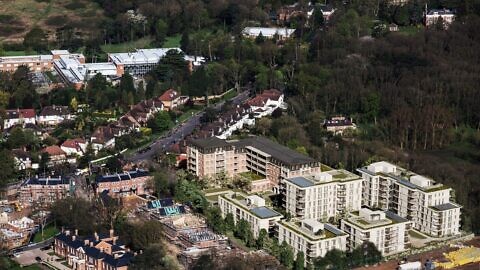
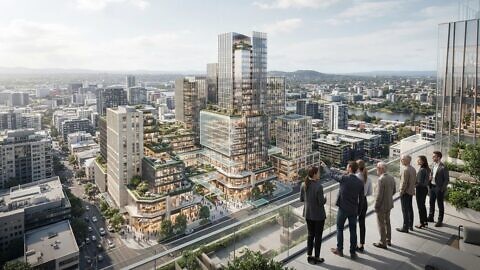
Context is everything for planning and public perception. By integrating 3D models into existing site photography, we place the project within its authentic urban fabric. This creates a psychological sense of permanence that grounds the design in reality. Master-planning CGI provides a definitive sense of place and community long before the first excavator arrives on site.
Strategic Deployment: Maximising ROI Across Modern Marketing Channels
In 2026, the utility of a single high-resolution asset extends far beyond a print brochure. 3D rendering for marketing has evolved into a versatile digital ecosystem that powers every touchpoint of the buyer journey. We’re seeing a decisive move towards immersive, motion-led content that cuts through the noise of a saturated market. Whether it’s a cinematic fly-through or a sophisticated virtual production, these assets are designed to capture attention and hold it. You aren’t just buying an image; you’re investing in a library of multi-channel content that ensures your project remains visible amongst a sea of competitors.
Interactive and Real-Time Assets
Static imagery is no longer the ceiling for ambitious developers. The adoption of Unreal Engine for real-time architectural walkthroughs has redefined how we engage stakeholders. By providing potential buyers with the agency to explore spaces on their own terms, you remove the passivity of traditional marketing. This interactivity isn’t just a novelty; it’s a conversion engine. These tools significantly increase time-on-site and foster a deeper psychological connection with the project, allowing users to experience the scale and flow of a building before the foundation is poured.
To complement these digital experiences, developers are increasingly turning to physical innovations such as immersive visual installations and large-format lenticular printing from Softmotion to create a high-impact presence in sales galleries.
CGI for Social Media and Brand Communication
Social platforms require a specific aesthetic intelligence to be effective. We tailor high-resolution stills to meet the curated standards of Instagram and Pinterest, ensuring your project feels native to these high-intent environments. Whilst some suggest that CGI can feel artificial, professional studio output provides a level of aesthetic perfection that drives viral engagement. For B2B investors, high-impact 3D animation on LinkedIn serves as a definitive statement of project viability and scale. It’s about projecting an image of inevitable success.
Transparency builds trust. Sharing the meticulous CGI process through “behind-the-scenes” content humanises the technical excellence behind the project. It demonstrates a commitment to detail that resonates with sophisticated investors who value precision. This strategic transparency positions your brand as an industry leader that leaves nothing to chance. To see how these dynamic assets translate into commercial success, view our award-winning property CGI portfolio.
Beyond the Pixel: Selecting a CGI Partner for Global Marketing Success
Selecting a partner for 3D rendering for marketing is a decision that extends far beyond aesthetic preference. It’s a choice of strategic alignment. A high-calibre 3D visualisation agency must do more than produce beautiful imagery; it must understand the commercial gravity of your project. Technical excellence is the baseline, but it’s the fusion of digital artistry and business intelligence that secures investment. When you evaluate a potential partner, look for a portfolio that includes world-renowned names like Zaha Hadid Architects or Aman Resorts. This level of trust from industry titans suggests a studio that can manage the complexities of global, high-stakes schemes whilst maintaining absolute brand consistency across every channel.
Evaluating Award-Winning Technical Excellence
Credibility in the CGI industry is often validated through peer recognition. Multiple CGarchitect Awards serve as a definitive benchmark for quality, proving that a studio operates at the vanguard of the field. Beyond standard software, seek out partners who utilise disruptive technology such as Unreal Studio Experience films. This capability allows a studio to handle high-value mixed-use schemes with a level of detail and responsiveness that traditional workflows cannot match. It ensures your visual assets are not just current, but future-proofed against a rapidly evolving digital market. High-stakes projects require a partner who is an innovator, not just a technician.
The Commercial Value of a Trusted Partner
A specialist studio acts as a safeguard for your commercial objectives. By providing precise, evocative, and story-driven visualisations, a partner supports the often-difficult process of planning approvals. They bridge the gap between architectural concept and public acceptance. This visual storytelling continues through the entire lifecycle of the project, from attracting initial seed investment to the final sale of the last unit. It’s a methodical approach to success. Every render should serve a specific strategic purpose in your sales funnel. If you’re ready to secure your market position and drive meaningful results, partner with Line Creative to elevate your next marketing campaign.
Secure Your Market Authority in 2026
The transition from conceptual design to commercial success isn’t a matter of chance; it’s a matter of strategic precision. We’ve established that 3D rendering for marketing serves as the primary narrative engine for high-value schemes, bridging the trust gap through evocative, meticulous, and uncompromising photorealism. By deploying these high-fidelity assets across interactive, immersive, and multi-channel platforms, you ensure your project doesn’t just exist in the market but defines it. The shift from mere visualisation to project valuation is now absolute.
The stakes for your next development are high, and the definitive safeguard against failure is a partner who understands the gravity of your vision. As a multiple CGarchitect Award-winning studio trusted by Zaha Hadid Architects and Aman Resorts, we bring a global perspective with a London-based creative heart to every scheme. It’s time to transform your architectural intent into a high-conversion commercial asset. Elevate your marketing with our award-winning CGI studio and secure the investment your vision deserves. The future of property marketing is already here; ensure you’re leading the next phase with confidence and clarity.
Frequently Asked Questions
Is 3D rendering for marketing as effective as traditional photography?
It’s often more effective because it offers absolute control over environmental variables that photography cannot match. Whilst photography is limited by physical construction status and weather, 3D rendering for marketing allows for the creation of perfect, high-fidelity scenes long before a project is built. This precision ensures a consistent, luxury aesthetic that eliminates the logistical risks and delays associated with traditional on-site shoots.
How does 3D rendering help in securing planning permission for developments?
It provides local authorities and stakeholders with a definitive, photorealistic preview of the project within its existing urban context. By accurately visualising scale, material finishes, and shadow impact, CGI removes the ambiguity that often leads to planning delays. This transparency fosters trust amongst decision-makers, demonstrating a commitment to architectural excellence and community integration that technical drawings alone cannot convey.
What is the typical ROI for investing in high-end CGI for property marketing?
High-end CGI delivers ROI by accelerating off-plan sales and securing early-stage investment, which significantly reduces carrying costs. By creating a library of versatile assets, a single master model replaces the need for multiple expensive marketing phases. This strategic approach ensures the project commands a premium valuation from inception, often resulting in a faster capital return compared to traditional, reactive marketing methods.
Can 3D rendering be used for social media marketing campaigns?
Absolutely, and it’s essential for maintaining a sophisticated brand presence on platforms like Instagram and LinkedIn. High-resolution stills and cinematic animations are tailored to meet specific platform aesthetics, driving engagement through visual perfection. These assets allow for the consistent delivery of high-stakes content that resonates with both B2B investors and aspirational end-users, ensuring your project remains visible in a crowded digital landscape.
How do I choose the right 3D rendering studio for a luxury brand?
Prioritise studios with a proven track record of working with internationally recognised architects and premium hospitality brands. You should look for hallmarks of excellence such as multiple CGarchitect Awards and a portfolio that demonstrates a deep understanding of visual storytelling. A studio that acts as a strategic partner, rather than a mere service provider, will ensure your brand’s prestige is protected through technical precision.
What is the difference between standard architectural CGI and photorealistic rendering?
Standard CGI focuses on basic geometry and spatial representation, whereas photorealistic rendering employs advanced lighting, texture mapping, and atmospheric effects to mimic reality. The latter is a critical tool for high-value marketing because it triggers an emotional response in the viewer. It moves beyond technical visualisation to create an immersive experience that feels tangible, closing the trust gap for investors and buyers alike.