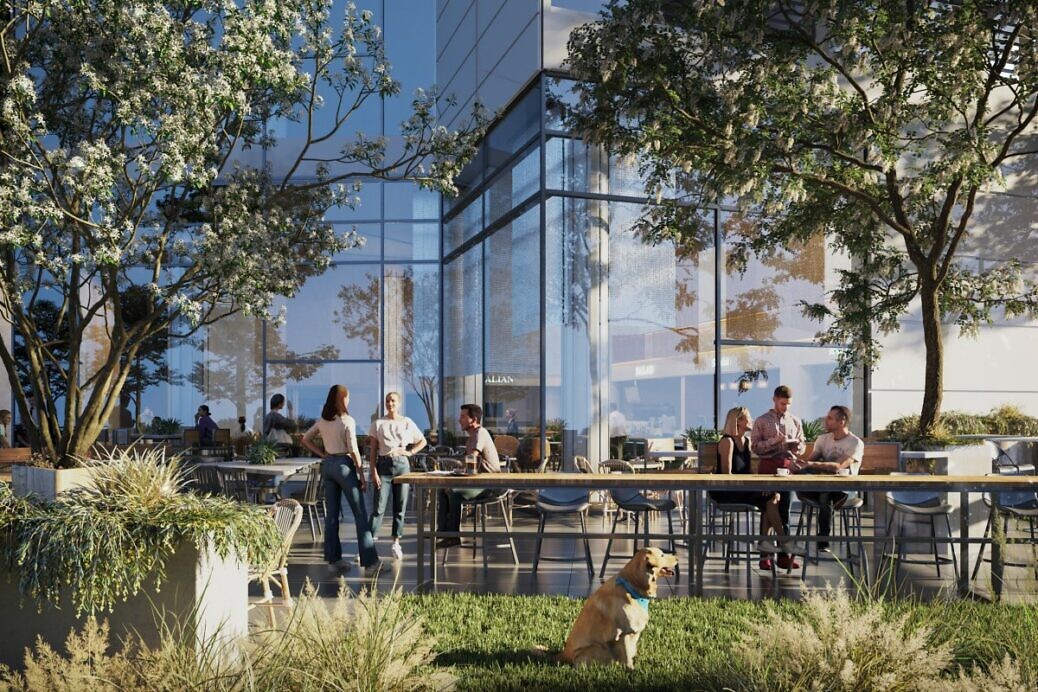
A static render is no longer a tool for persuasion; it’s a liability in a market where stakeholders demand total immersion. You understand that the cost of a single planning delay or a hesitant investor can reach into the millions. It’s exhausting when a visionary design is met with blank stares because a committee cannot grasp the spatial narrative of a complex mixed-use scheme. You need a way to cut through the noise and command the room.
This guide will show you how to leverage 3d animation for architectural presentations to bridge that gap, transforming technical complexity into an irresistible commercial vision. We’ll explore how cinematic storytelling, rhythmic pacing, and technical precision secure unanimous approvals, accelerate investor sign-off, and establish your brand as a leader in the global luxury market. By the end of this article, you’ll understand why world-class studios treat animation not as a luxury add-on, but as a strategic engine for de-risking high-value developments. We’ll move from the psychology of visual persuasion to the practical application of high-velocity pre-construction sales assets that ensure your project stands out in a crowded digital landscape.
Key Takeaways
- Understand why static imagery often fails to convey the complex spatial narratives of mixed-use schemes and how motion influences stakeholder psychology.
- Learn to categorise animation formats by their strategic purpose to ensure your visual assets align perfectly with planning, marketing, or investment goals.
- Discover how to leverage 3d animation for architectural presentations to de-risk the planning process and overcome community or council objections.
- Realise the commercial impact of premium CGI in securing rapid investor sign-off and driving high-velocity sales in competitive global property markets.
- Gain insight into a narrative-led methodology that combines disruptive technologies with cinematic precision to protect and elevate your project brand.
The Evolution of Architectural Presentation: Beyond Static Imagery
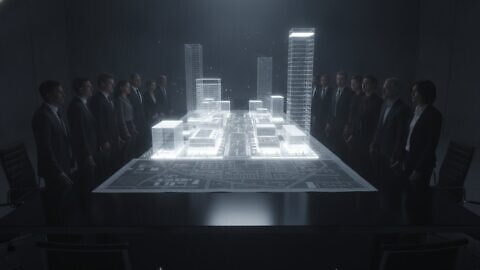
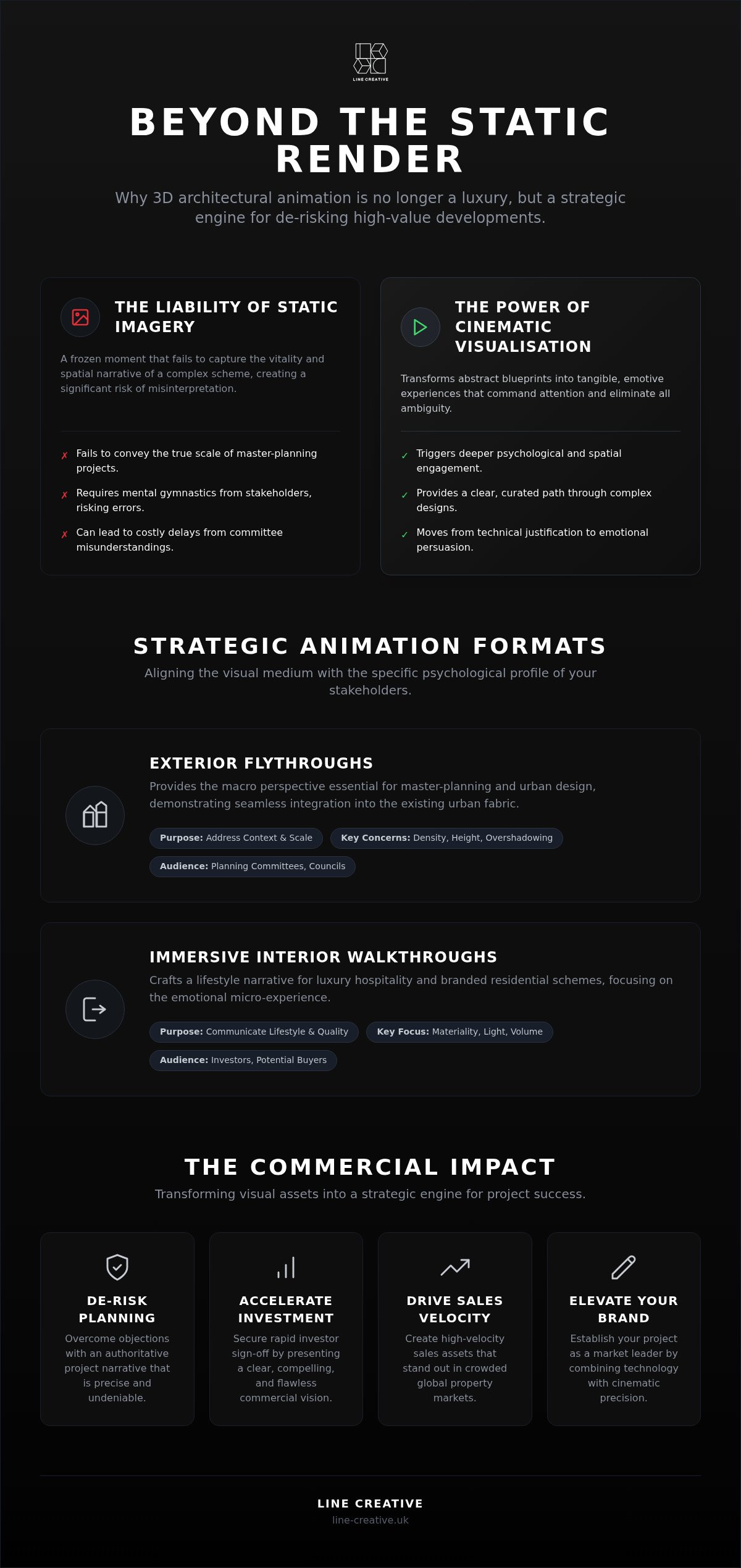
Static renders are no longer sufficient for the complexities of 2026 property development. A single frame, no matter how photorealistic, remains a frozen moment that fails to capture the “flow” and vitality of a mixed-use scheme. Stakeholders don’t just want to see a building; they need to experience the atmosphere, the transition of light, and the way people move through a space. This is where Architectural animation becomes indispensable. By integrating 3d animation for architectural presentations, developers transform abstract blueprints into tangible, emotive experiences that command attention and eliminate ambiguity.
Motion triggers a deeper psychological engagement than static media. It forces the brain to process spatial relationships and scale in a way that feels instinctive. When a planning committee or a lead investor watches a cinematic sequence, they aren’t just observing a design; they are inhabiting it. This level of immersion is the definitive solution to information overload, providing a clear, curated path through a project’s most complex spatial narratives.
From Technical Drafting to Visual Storytelling
The industry has moved beyond the era of simply showing a building. In a global market crowded with luxury schemes, the goal is now to sell a vision that feels inevitable. Narrative-led CGI acts as a safeguard against stakeholder confusion, ensuring that the unique selling points of a project are highlighted through deliberate, rhythmic pacing. 3D architectural animation is a strategic asset for de-risking high-value schemes by ensuring every stakeholder shares a singular, flawless vision of the future. By aligning visual narratives with commercial goals, firms can move from technical justification to emotional persuasion. You can see the impact of this approach in our portfolio of award-winning visual assets.
The Limitations of Traditional 2D Media
Traditional 2D elevations and floor plans often struggle to convey the true scale of master-planning projects. These formats require the viewer to perform mental gymnastics to “build” the project in their head, which creates a significant risk of misinterpretation. In a high-stakes planning committee, a single misunderstanding about height, density, or shadow can lead to costly delays. The strategic use of 3d animation for architectural presentations ensures that the design intent is never lost in translation. It provides an authoritative project narrative that is precise, evocative, and undeniable. This clarity is essential for bridging the gap between design intent and public perception, turning potential sceptics into project advocates.
Strategic Typologies: Selecting the Optimal Animation Format
Selecting the correct visual format is a high-stakes decision that dictates a project’s commercial trajectory. It isn’t merely a stylistic choice; it’s a strategic one. You must align the technical medium with the specific psychological profile of your stakeholders. Whether the objective is securing planning approval for a complex mixed-use scheme or attracting global investment for a luxury resort, the typology of the film must be precise, evocative, and technically flawless. Using 3d animation for architectural presentations allows you to deploy a narrative engine tailored to your project’s unique challenges.
Exterior Flythroughs for Large-Scale Schemes
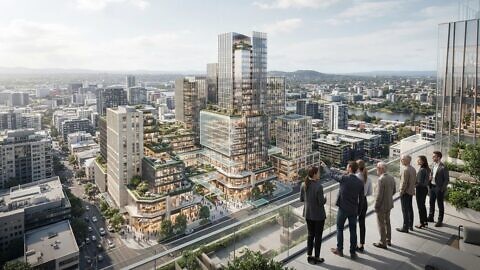
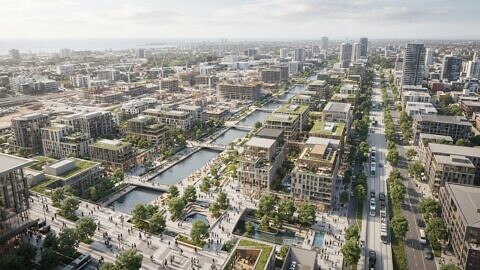
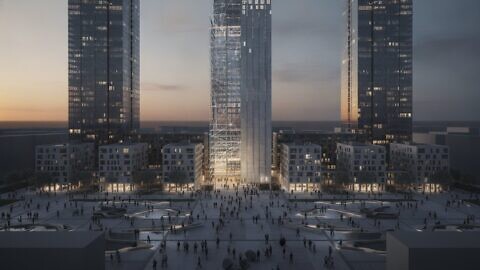
Exterior flythroughs provide the macro perspective necessary for master-planning and urban design. These films demonstrate a project’s seamless integration into the existing urban fabric, addressing critical concerns about density, height, and overshadowing. We utilise sophisticated lighting, atmospheric effects, and cinematic flair to reveal the architectural rhythm of a facade. By mastering the fundamentals of 3D modeling, surfacing, and animation, we ensure that every frame communicates structural integrity and aesthetic perfection. These assets are the definitive solution for planning committees that need to see how a vision translates into the real world.
Immersive Interior Walkthroughs
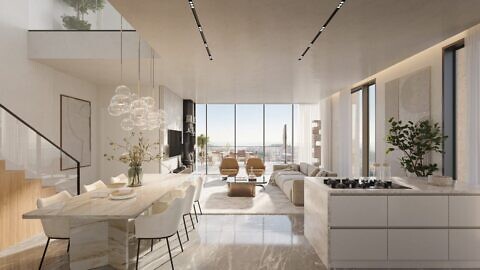
For luxury hospitality and branded residential schemes, the goal shifts to the emotional micro-experience. Interior walkthroughs craft a lifestyle narrative, allowing potential buyers to feel the texture of the materials and the volume of the space. This requires extreme technical precision in light behaviour and material physics. High-quality motion is built upon the foundation of world-class interior architectural visualisation, ensuring every detail—from the grain of the marble to the soft glow of bespoke lighting—resonates with the target audience. It’s about moving beyond “showing” a room to “selling” an experience.
Real-Time Visualisation and Virtual Production
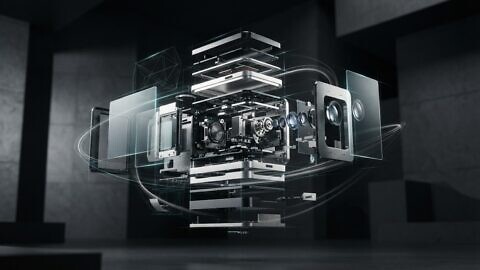
The arrival of 2026 has seen Unreal Engine disrupt traditional 3d animation for architectural presentations. Real-time visualisation offers a level of interactivity that pre-rendered films cannot match. It allows stakeholders to explore a scheme at their own pace, making it the definitive solution for high-stakes investor meetings where flexibility and transparency are paramount. For elite clients, our expertise in virtual production and augmented VR provides an immersive environment that bridges the gap between the digital and the physical. If you’re ready to elevate your brand, discuss your requirements with our strategic team to find the optimal format for your next project.
The Business Case: Planning, Investment, and ROI
In high-stakes development, the return on investment for visual assets isn’t measured in engagement metrics, but in secured capital and expedited planning approvals. Low-quality CGI is a profound liability for luxury schemes, as it suggests a lack of technical rigour, commercial seriousness, and aesthetic standards. By contrast, 3d animation for architectural presentations serves as a strategic engine for de-risking high-value projects, ensuring that every stakeholder understands the project’s viability from the outset. In a landscape where delays cost millions, premium visualisation is the essential safeguard against failure.
Winning Planning Permission with Authoritative CGI
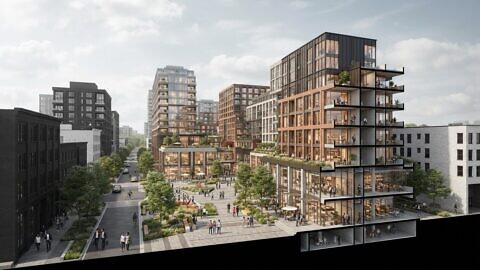
Securing planning permission in sensitive urban environments requires more than just technical compliance; it requires visual persuasion. Our approach to architectural visualisation for mixed-use planning uses motion to prove that massing, density, and overshadowing concerns have been meticulously addressed. Animation provides an undeniable, authoritative record of how a building interacts with its surroundings throughout the day. This transparency turns potential community objections into informed consensus, moving projects through the committee phase with precision and speed.
Maximising Investor Confidence and ROI
Investors in 2026 demand a level of transparency and excellence that static imagery cannot provide. World-class visuals translate complex architectural data into a compelling commercial narrative that resonates with global capital raises. High-resolution animation serves as a “real-world” proof of concept pre-build, allowing investors to witness the finished product’s quality and atmospheric impact before a single brick is laid. This clarity eliminates the “imagination gap,” accelerating sign-off and ensuring that funding is secured with total confidence in the project’s eventual success.
Accelerating Property Sales and Marketing
Pre-construction marketing relies entirely on the strength of your digital assets to build brand authority. Cinematic motion allows you to drive high-velocity sales in the luxury hospitality and residential sectors long before the first stone is laid. By crafting an emotive lifestyle narrative, you can secure buyer commitment whilst the project is still in the master-planning phase. You can explore how these assets drive commercial results in the Line Creative portfolio, where we showcase projects that have dominated their respective markets. To protect your investment and ensure market dominance, contact our studio today to discuss a strategic partnership.
The Line Creative Methodology: From Concept to Real Visual Life
At Line Creative, we don’t just produce visuals; we engineer strategic narrative engines that align with your project’s commercial and architectural objectives. Our methodology for 3d animation for architectural presentations is built on a story-centred approach, ensuring that every frame serves a purpose in the wider communication strategy. We support internationally recognised firms across the UK, Europe, and the Middle East, delivering photorealistic precision through disruptive CGI technologies. This isn’t just about rendering; it’s about protecting your vision with technical rigour and aesthetic perfection.
A Collaborative, Partner-Led Process
We aren’t a vendor. We operate as an extension of your design team, ensuring that our technical output is perfectly synchronised with your architectural vision. This isn’t a transactional relationship; it’s a strategic alliance where trust and joint creativity are the essential safeguards against misaligned outcomes. We handle high-value mixed-use schemes with a level of technical rigour that matches the sophistication of your design intent. By positioning ourselves as your strategic partner, we ensure that the gravity and importance of your project are reflected in every cinematic sequence we produce.
Award-Winning Technical Standards
Our status as a multiple CGarchitect Awards winner isn’t just a trophy; it’s a benchmark for the excellence we bring to every high-stakes scheme. We leverage 2026’s most advanced innovation to create visual campaigns that command respect in the property market. This commitment to aesthetic perfection and technical excellence is why we’re trusted by world-leading firms like Zaha Hadid Architects. We understand that the stakes are high, and our expertise is the definitive solution to the challenges of modern visual communication. If you’re ready to secure your project’s success, we invite you to contact the studio for a strategic consultation on your next scheme.
Secure Your Project’s Commercial Future
The transition from static visualisation to cinematic narrative is the definitive shift in 2026 property development. You’ve seen how motion bridges the gap between design intent and public perception, turning complex spatial data into an irresistible commercial vision. By selecting the optimal typology and leveraging real-time technologies, you ensure that every stakeholder shares a singular, authoritative understanding of your scheme. High-stakes developments require more than just technical accuracy; they demand a level of visual persuasion that only world-class assets can provide.
Integrating 3d animation for architectural presentations is your essential safeguard against planning delays and investor hesitation. As a winner of multiple CGarchitect Awards and a studio trusted by firms like Zaha Hadid Architects and Aman Resorts, we specialise in protecting high-value mixed-use developments through aesthetic perfection and technical rigour. Don’t leave your project’s success to chance. Partner with an award-winning CGI studio for your next presentation and transform your vision into a market-dominating reality. Your project deserves a narrative that matches the scale of your ambition.
Frequently Asked Questions
How does 3D animation improve the chances of securing planning permission?
3D animation mitigates planning risk by providing an undeniable visual record of a project’s impact on its environment. It addresses specific concerns regarding massing, overshadowing, and urban integration that static imagery cannot fully resolve. By presenting a clear, cinematic narrative, developers can turn potential community or council objections into informed consensus. This transparency is vital for high-stakes mixed-use schemes where the cost of a single planning delay is significant.
What is the typical timeline for a high-end architectural animation project?
Timelines vary depending on the complexity of the scheme and the required level of cinematic detail. A standard high-end production typically spans between six and twelve weeks, covering everything from initial storyboarding to final post-production. Large-scale master-planning projects or immersive Unreal Studio Experience films may require extended schedules to ensure technical rigour. We prioritise a collaborative process that aligns with your project’s critical investment or planning milestones to ensure timely delivery.
Can 3D animation be used for both interior and exterior architectural presentations?
Yes, 3d animation for architectural presentations is equally effective for both exterior urban narratives and interior lifestyle experiences. Exterior flythroughs are essential for demonstrating a building’s rhythm and its integration into the wider urban fabric. Conversely, interior walkthroughs focus on the emotional micro-experience, showcasing material physics and lighting behaviour. Both formats are critical for luxury hospitality and residential projects where atmospheric perfection is the key differentiator in a crowded market.
How does Unreal Engine differ from traditional 3D rendering for presentations?
Unreal Engine offers real-time interactivity that traditional pre-rendered films cannot provide. Whilst traditional rendering involves a linear production process with fixed camera paths, real-time technology allows stakeholders to explore a digital environment dynamically. This is the definitive solution for high-stakes investor meetings where transparency and flexibility are paramount. Our Unreal Studio Experience films combine this interactivity with award-winning photorealistic precision, setting a new benchmark for immersive architectural storytelling in 2026.
What information is required to start a 3D architectural animation project?
To initiate a project with the necessary technical rigour, we require comprehensive design documentation. This typically includes:
- Detailed architectural 3D models or 2D CAD drawings.
- Material and finish schedules to ensure photorealistic accuracy.
- Landscape and master-planning data for exterior context.
- A clear brief outlining the strategic goals of the presentation.
Having these assets early ensures that the visual narrative aligns perfectly with your commercial and planning objectives.
Why is story-driven visual communication essential for large-scale mixed-use schemes?
Large-scale schemes often suffer from information overload, making it difficult for stakeholders to grasp complex spatial narratives. Story-driven visual communication provides a curated, rhythmic path through the project, highlighting its viability and unique selling points. By focusing on a singular, authoritative narrative, we eliminate ambiguity and build confidence amongst investors and planning committees. This methodology ensures that the strategic importance of the development is communicated with clarity, movement, and aesthetic excellence.