A generic 3D model is the silent killer of a multi-million-pound planning application. In an industry where the margin for error is non-existent, relying on off-the-shelf assets is a strategic gamble that risks your entire project’s viability. You’ve likely experienced the frustration of “cookie-cutter” visuals that fail to differentiate your brand, or felt the mounting pressure of a planning committee scrutinising imagery that lacks true architectural depth.
The choice between professional cgi vs stock 3d models is ultimately a choice between risk and reliability. You recognise that high-tier investors demand more than just a picture; they require a narrative that is precise, evocative, and technically unimpeachable. This guide explores why bespoke architectural visualisation is the essential safeguard for high-stakes developments, providing the photorealistic precision needed to secure approval and command market attention. We will examine the limitations of generic geometry and reveal how custom-engineered visuals transform complex schemes into undisputed commercial successes.
Key Takeaways
- Understand why bespoke visual narratives are essential for differentiating high-value developments from the limitations of generic, mass-market assets.
- Examine the hidden technical debt and legal risks associated with “the stock trap” that can derail complex planning applications and project timelines.
- Learn how photorealistic precision and story-driven CGI serve as the ultimate safeguard for securing investor confidence and navigating rigorous planning committees.
- Develop a criteria-led approach for selecting a strategic partner when weighing up professional cgi vs stock 3d models for your next international scheme.
Professional CGI vs Stock 3D Models: The Strategic Divide
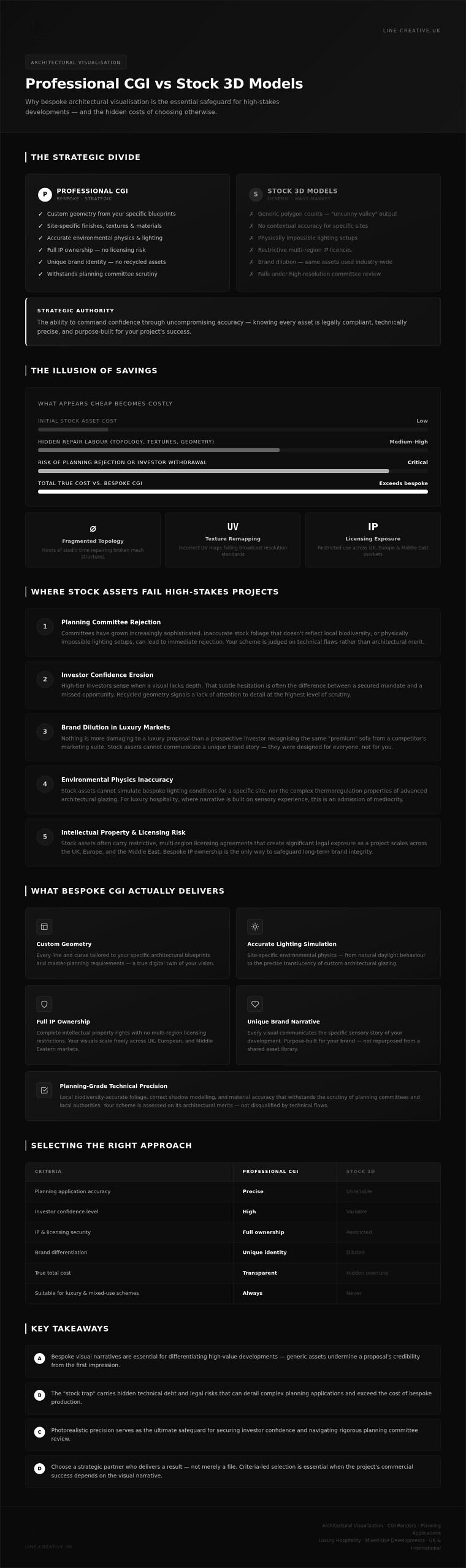
The distinction between professional cgi vs stock 3d models isn’t merely a matter of budget; it’s a fundamental difference in strategic intent. Professional CGI functions as a bespoke, story-driven visual communication tool designed to mitigate risk in high-stakes property developments. Stock models, conversely, are pre-made, generic assets sold on mass-market platforms. Whilst they appear cost-effective initially, they often create an “illusion of savings” that evaporates when a project faces the scrutiny of a planning committee or a discerning global investor. This divide defines “Strategic Authority” in architectural visualisation: the ability to command confidence through uncompromising accuracy.
Strategic Authority isn’t just about the aesthetic quality of the final render. It’s about the confidence that comes from knowing every asset in the scene is legally compliant, technically accurate, and purpose-built for the project’s success. It’s the difference between a service provider who delivers a file and a strategic partner who delivers a result. In the world of luxury hospitality and high-value mixed-use schemes, the visual narrative is the project’s first impression. If that impression is built on recycled geometry, the entire proposal’s credibility is undermined.
The Anatomy of a Bespoke CGI Render
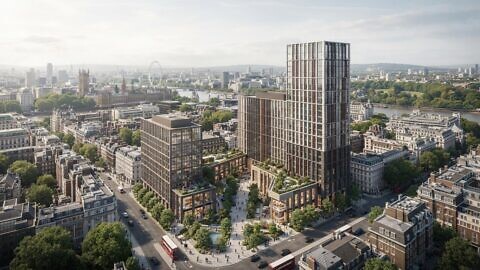
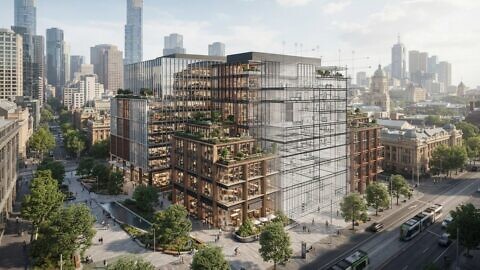
Bespoke rendering begins with custom geometry. Every line and curve is tailored to your specific architectural blueprints and master-planning requirements. Unlike generic assets, these visuals incorporate unique material properties that reflect actual site-specific finishes and textures, from the specific grain of a limestone facade to the precise translucency of custom glazing. Bespoke CGI is the intersection of technical precision and narrative flair. This meticulous approach ensures that the final output isn’t just a picture; it’s a digital twin of your vision that stands up to technical interrogation from any stakeholder.
The Limitations of Mass-Market Stock Assets
Mass-market assets rely on generic polygon counts that frequently result in “uncanny valley” outcomes, particularly in high-resolution architectural flythroughs. They lack the contextual accuracy required for complex urban design. When a developer relies on stock furniture or foliage, they risk brand dilution. There’s nothing more damaging to a luxury proposal than a prospective investor recognising the same “premium” sofa in a competitor’s marketing suite. Choosing professional cgi vs stock 3d models means deciding whether your project deserves a unique identity or a recycled aesthetic that suggests a lack of attention to detail.
The Hidden Costs of the ‘Stock Trap’ in Visualisation
Choosing off-the-shelf assets often introduces a crippling “technical debt” that remains invisible until the final stages of production. Whilst the initial price point of a stock asset is low, professional studios frequently spend hours repairing fragmented topology, correcting non-manifold geometry, or re-mapping textures to meet broadcast standards. This hidden labour cost negates any perceived savings. When evaluating professional cgi vs stock 3d models, you must consider the structural integrity of the digital asset. A project built on unstable foundations will always fail under the weight of high-resolution scrutiny.
Technical Errors and Planning Rejections
Planning committees and local authorities have become increasingly sophisticated in their review of visual evidence. Inaccurate stock foliage that doesn’t reflect local biodiversity or physically impossible lighting setups can lead to immediate rejection. The stakes are too high for “good enough” imagery. Precision in visualisation for planning applications is the only way to ensure your scheme is judged on its architectural merits rather than technical flaws. Investors sense when a visual lacks depth; that subtle hesitation is often the difference between a secured mandate and a missed opportunity.
Beyond the geometry, stock assets fail to account for the environmental physics of a specific site. They cannot simulate bespoke lighting conditions or the complex thermoregulation properties of advanced architectural glazing. For luxury hospitality brands, where the narrative is built on the sensory experience of a space, stock models are an admission of mediocrity. They cannot communicate the unique story of your brand because they weren’t designed for it; they were designed for everyone.
Licensing Risks for Global Brands
Intellectual property is a significant liability in the “stock trap.” Stock assets often carry restrictive, multi-region licensing agreements that can lead to legal exposure as a project scales across the UK, Europe, and the Middle East. Owning bespoke IP is the only way to safeguard your brand’s long-term interests. Professional studios act as a trusted partner, providing a clear framework for IP ownership that ensures consistency across every international market. If you’re managing a global rollout, you can’t afford the uncertainty of third-party licenses. You might consider discussing your project’s specific IP requirements with a specialist to ensure your visual assets are as secure as your physical ones.
Why High-Stakes Projects Demand Bespoke Architectural Visualisation
High-stakes developments are not merely architectural exercises; they are complex financial and political manoeuvres. In this environment, the visual representation of a scheme is its most potent weapon. Elite firms like Zaha Hadid Architects and Olson Kundig recognise that communicating ambitious, boundary-pushing designs requires a level of fidelity that stock assets cannot provide. When weighing up professional cgi vs stock 3d models, the decision hinges on whether you need a generic placeholder or a strategic asset that accelerates investment. High-quality architectural rendering is proven to shorten sales cycles by providing the photorealistic certainty that high-tier investors demand.
The emergence of the “Unreal Studio Experience” has further widened the gap between bespoke and off-the-shelf solutions. This disruptive technology allows for real-time, immersive exploration of a site that stock models simply cannot support. It transforms a static presentation into a dynamic narrative, allowing stakeholders to experience the interplay of light, material, and space with absolute precision. This isn’t just about looking better; it’s about providing a definitive proof of concept that mitigates the perceived risk of a multi-million-pound investment.
Communicating Ambitious Narratives
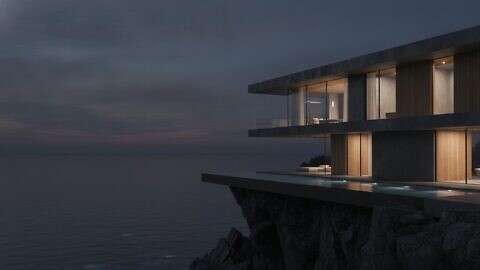
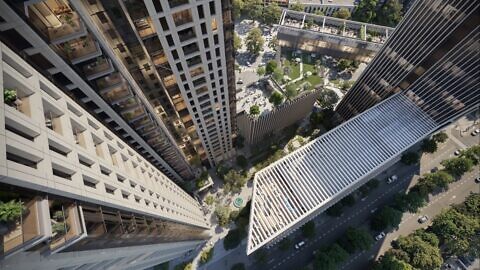
Story-centred CGI is the differentiator in a crowded international market. For luxury resorts and large-scale master-planning, the visual must resonate emotionally with both end-users and stakeholders. Bespoke animation allows for a curated journey through a space, highlighting unique architectural features that stock assets would obscure or misrepresent. You can see the impact of this approach in Line Creative’s portfolio of award-winning projects, where every frame is engineered to tell a specific, high-value story. Generic assets don’t have a voice; bespoke visuals speak with authority.
Securing Planning and Investor Trust
Precision is the currency of trust in property development. Photorealistic precision reduces the perceived risk for planning officers by demonstrating a thorough understanding of the local context and environmental impact. When a proposal involves complex geometries or sensitive urban sites, bespoke visuals are a prerequisite for success. They provide the psychological assurance that the final build will match the promised vision. If you are ready to elevate your project’s visual authority, you should view our bespoke CGI services to see how we safeguard the world’s most ambitious schemes.
Implementing a Professional CGI Strategy for Your Next Development
Successful developers don’t just “buy assets”. They build strategic partnerships. When choosing between professional cgi vs stock 3d models, the decision must be viewed through the lens of long-term commercial viability. A studio shouldn’t just be a vendor; it should be a guardian of your project’s reputation. They provide the technical excellence, narrative depth, and aesthetic perfection required to stand out in a crowded, competitive, global market. Transitioning from procurement to partnership allows you to leverage expert insight into how visual storytelling influences investor sentiment and planning outcomes.
Defining Your Visual Objectives
Before production begins, you must identify your primary objective. Is the goal to secure planning approval, attract high-tier investment, or drive marketing sales for a luxury resort? Each outcome requires a distinct visual language. Whilst high-resolution stills are essential for technical documentation, high-impact CGI animation or immersive VR experiences are often the deciding factor in competitive master-planning. Aligning visual flair with your specific architectural narrative ensures that every frame serves a strategic purpose. Don’t settle for generic geometry when your scheme demands a bespoke solution.
Evaluating Your CGI Partner
Not every studio is equipped for high-stakes property developments. You should seek independent validation through industry accolades, such as the CGarchitect awards, which distinguish elite creators from generic providers. A strategic partner must demonstrate the ability to handle complex, large-scale, mixed-use schemes whilst offering a sophisticated global perspective. They should leverage disruptive technologies to provide a level of photorealistic immersion that stock assets simply cannot replicate. Look for a team that acts as a bold innovator, leading the industry rather than merely following it.
The transition from concept to motion is a methodical, precise, and rigorous process. It requires a studio that understands the psychological impact of imagery on decision-making. By choosing bespoke visual storytelling over recycled geometry, you aren’t just creating a picture; you’re safeguarding the future of your development and ensuring its undisputed commercial success. If you’re ready to secure your next project’s legacy, it’s time to move beyond the limitations of stock and embrace the authority of professional CGI.
Securing Your Development’s Architectural Legacy
The architectural landscape is unforgiving. When the success of a multi-million-pound scheme depends on the confidence of a planning committee or the interest of global investors, the distinction between professional cgi vs stock 3d models becomes a matter of project survival. You’ve seen how bespoke visualisation eliminates technical debt and provides the narrative precision required for luxury hospitality and complex mixed-use developments. By moving beyond generic geometry, you protect your brand from dilution and ensure your vision is communicated with absolute clarity.
As a multiple CGarchitect 3D Award winner trusted by industry leaders like Zaha Hadid Architects and Aman Resorts, Line Creative specialises in transforming ambitious designs into undisputed commercial successes. We provide the technical mastery and strategic insight necessary to safeguard your project’s future. Partner with Line Creative for world-class bespoke CGI. Your next development deserves more than a placeholder; it deserves a visual legacy that commands respect and delivers results.
Frequently Asked Questions
Is stock 3D modelling significantly cheaper than professional CGI?
Whilst the initial purchase price of a stock model is lower, it often results in higher long-term costs. Professional studios spend hours fixing broken topology and re-mapping textures to meet broadcast standards. This hidden labour cost often exceeds any initial savings. When comparing professional cgi vs stock 3d models, you must account for the time spent correcting generic assets to match your project’s specific architectural requirements.
Can stock 3D models be used for planning permission applications?
Stock assets are generally unsuitable for planning applications because they lack the technical precision required by local authorities. Planning officers demand verified views and accurate context that off-the-shelf models cannot provide. Using generic foliage or lighting that doesn’t reflect the site’s reality can lead to immediate rejection. Bespoke visualisation ensures that your scheme is judged on its actual architectural merits rather than misleading, generic placeholders.
How does bespoke CGI animation improve property sales ROI?
Bespoke animation accelerates property sales by creating an emotional connection through story-driven visual communication. Unlike static stock assets, custom-built motion sequences highlight the unique selling points of high-value mixed-use schemes. This level of photorealistic precision reduces perceived risk for investors and buyers, leading to faster decision-making. High-quality imagery isn’t just a marketing cost; it’s a strategic asset that secures higher investment tiers and premium market positioning.
What are the main risks of using generic stock assets in architectural visualisation?
The primary risks include brand dilution, technical debt, and legal exposure. Using the same stock furniture as a competitor undermines your project’s luxury narrative. Technically, poor polygon counts in stock models lead to “uncanny valley” results that alienate stakeholders. Mass-market assets also carry restrictive, multi-region licensing agreements that can create significant intellectual property liabilities as your project expands across international markets like the UK, Europe, and the Middle East.
How do I choose between a 3D rendering studio and buying stock models?
The choice depends on the project’s stakes. If you are developing a complex, high-value scheme that requires planning approval or investor trust, a professional 3D rendering studio is essential. Stock models are only suitable for low-stakes, generic visualisations where precision isn’t critical. Deciding between professional cgi vs stock 3d models is ultimately a decision about risk. A studio like Line Creative acts as a strategic partner, providing bespoke solutions that align with your specific architectural narrative.
What makes a CGI studio “award-winning” and why does it matter for my project?
Industry accolades, such as the CGarchitect awards, provide independent validation of a studio’s technical excellence and innovative capacity. For your project, working with an award-winning studio like Line Creative ensures that your visuals meet the highest global standards. It signals to investors and planning committees that your scheme is backed by world-class expertise. This credibility is vital when communicating ambitious designs for elite firms like Zaha Hadid Architects or Aman Resorts.