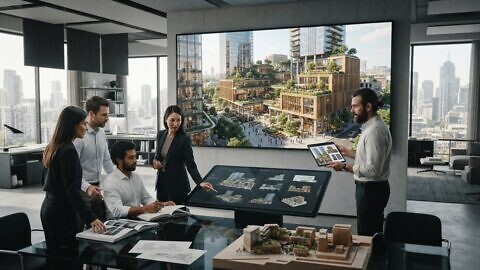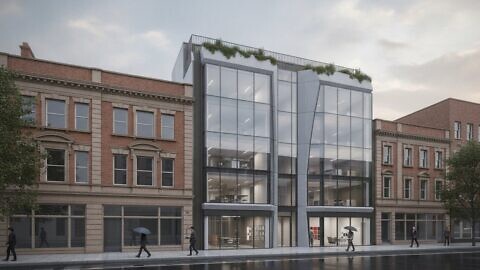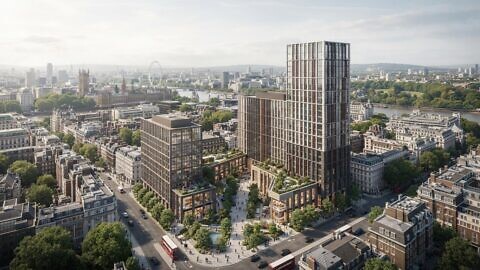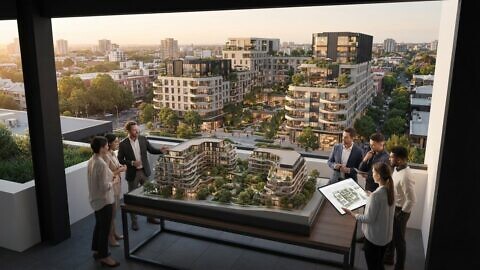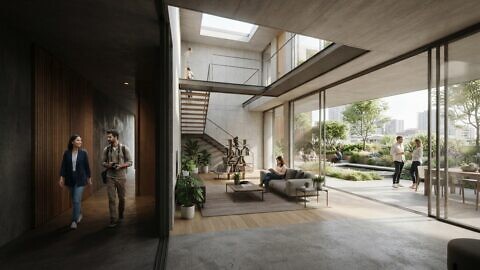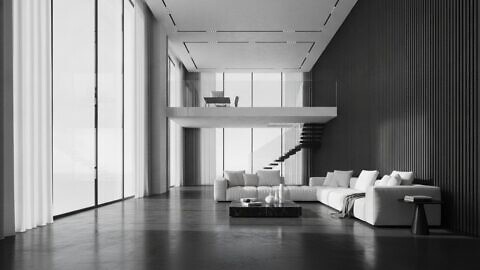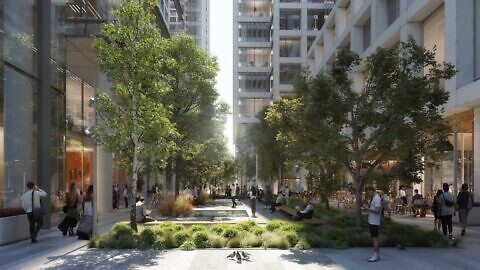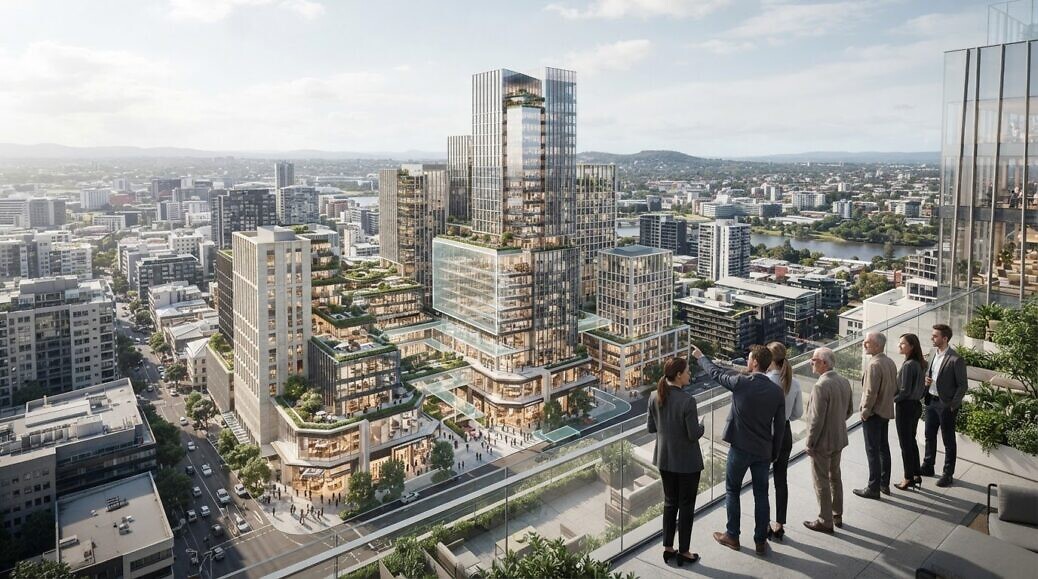
A development can be commercially compelling and still fail to communicate its value. In a crowded property market, visualisation for property marketing helps you explain a scheme’s scale, experience and design intent before it exists, giving investors, planners and buyers a clearer way to assess the proposal.
Static materials can struggle to hold attention when a complex project needs to make sense to people with different priorities. The challenge is to build understanding and confidence without relying on imagery alone to secure planning approval or investment. Strategic visual communication can clarify design intent, reduce the risk of misunderstanding and give stakeholders a more useful basis for evaluating the project.
This guide explains how architectural precision, story-led content and tools such as real-time rendering can make CGI architectural visualisation a strategic asset. It covers how to plan stills, animation and immersive interactive experiences for planning, investment and sales, while keeping the project’s narrative clear and credible.
Key Takeaways
- Use visualisation for property marketing to explain complex proposals through clear, coherent stories for different audiences.
- Choose stills, animation and interactive content according to what each audience needs to understand or assess.
- Use accurate CGI to communicate design intent and help planning committees and investors evaluate a scheme.
- Plan visual content across planning, investment and sales instead of treating every image as a standalone deliverable.
- Work with a CGI studio experienced in complex schemes to build a consistent project narrative across different materials.
The Evolution of Visualisation for Property Marketing
In 2026, property visualisation needs to do more than depict a proposed building. It should help people understand the scheme, its context and the experience it aims to create, across digital channels, stakeholder presentations and sales materials. Architectural rendering has developed from hand-drawn depictions into computer-generated imagery that can give unbuilt spaces a convincing visual presence. For complex developments, CGI is a strategic communication tool, not simply an image service.
Visualisation for property marketing translates plans, massing and material choices into scenes audiences can interpret. It cannot guarantee planning approval or investment, but it can reduce the risk that a proposal is misunderstood or overlooked. That clarity is especially useful when a project’s defining qualities are difficult to convey through technical documents alone.
Beyond Photorealism: The Power of Narrative
Technical accuracy is the baseline. Architectural precision helps ensure a visual reflects the intended design, but a technically correct image may still leave its audience unsure what makes the place distinctive. A clear narrative gives the details a purpose. For example, a view could explain how residents move through shared space, how uses connect within a mixed-use scheme, or how the development relates to its setting.
Showing how a place is intended to work can help prospective buyers understand its character and give investors a clearer view of the proposition. Considered composition, lighting and human presence can communicate atmosphere without obscuring the design. A consistent visual language across project materials strengthens recognition through coherence, not decoration.
Information Overload and the Need for Visual Clarity
Property audiences encounter dense proposals across websites, presentations and marketing channels. Generic imagery can make a distinctive scheme look interchangeable. CGI can organise architectural information into purposeful views, helping stakeholders grasp scale, programme and the relationships between spaces. No single image needs to explain everything: assign each view a specific job, such as establishing the wider context, explaining a key public space or bringing an interior to life.
Visual communication is a strategic asset because it translates design intent into audience-focused material that supports informed evaluation and consistent marketing.
A story-centred approach connects each visual to a communication goal, whether that is explaining an urban response, conveying a residential experience or expressing a development’s identity. The result is more than a polished render. It is a structured visual narrative that helps your project stand apart from generic market imagery.
Premium CGI Technologies Driving Market Authority
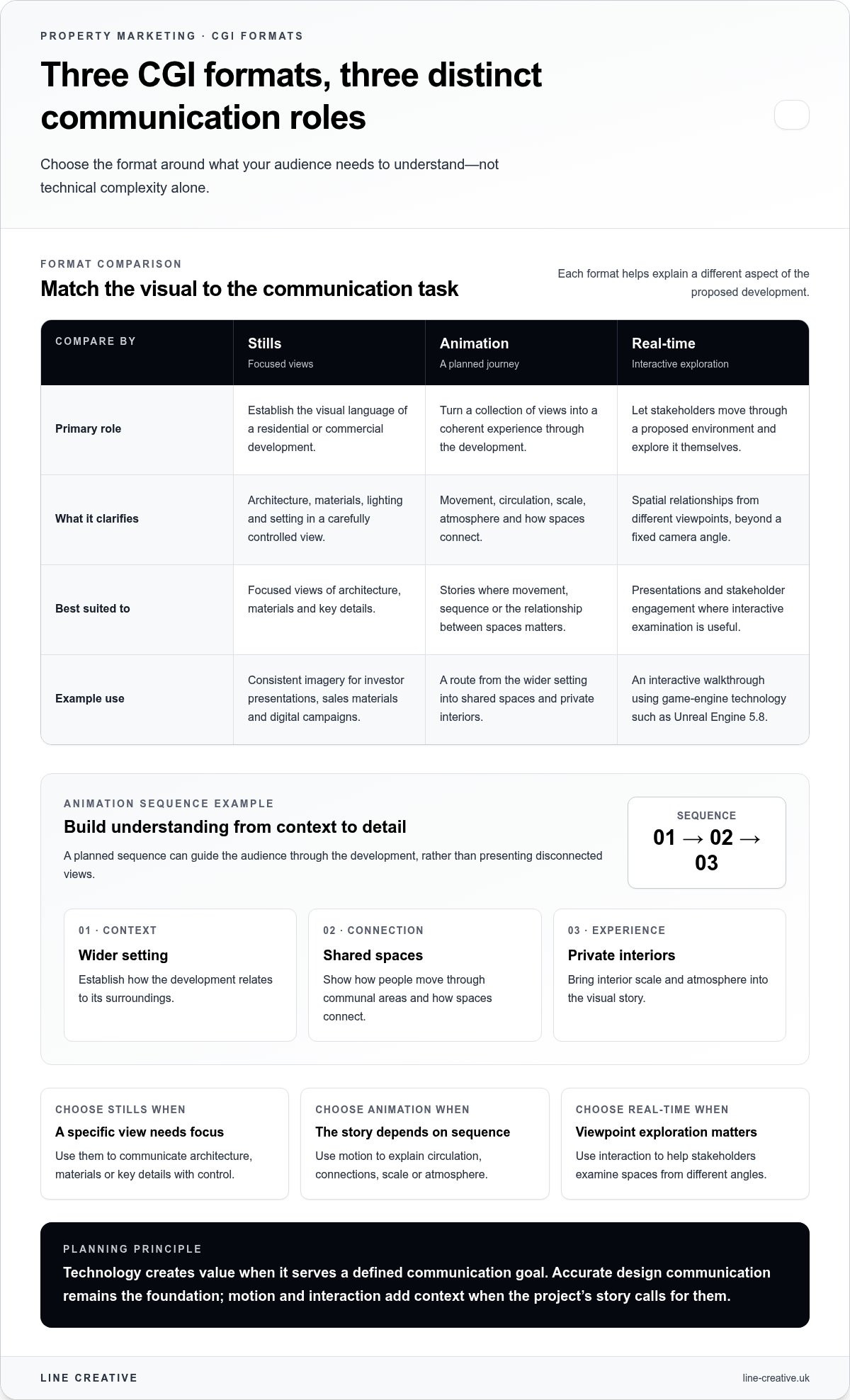
Technology creates value when it serves a defined communication goal. High-resolution stills can establish the visual language of a residential or commercial development, presenting its architecture, materials, lighting and setting with control that on-site photography cannot provide before completion. Carefully art-directed imagery can carry a consistent impression across investor presentations, sales materials and digital campaigns.
For examples of how architectural visualisation can respond to different project narratives, explore the Line Creative portfolio. The measure is not technical complexity alone. Each visual should help its audience understand the proposition and recognise what distinguishes it.
CGI Animation and Immersive Motion
Architectural animation turns a collection of views into a journey through a development. A planned sequence might move from the wider setting into shared spaces and private interiors, clarifying circulation, scale and atmosphere along the way. For a residential or hospitality project, this progression can help prospective buyers or guests understand how spaces connect and are intended to feel, while providing a coherent narrative for digital channels.
Motion does not replace accurate design communication. It adds context, helping the audience read the development as an experience rather than a set of isolated rooms. Use animation when movement, sequence or the relationship between spaces is important to the story. Stills remain useful for focused views of architecture, materials and key details.
Real-Time Rendering and Unreal Engine Experiences
Real-time rendering allows interactive exploration as part of architectural visualisation. Using game-engine technology such as Unreal Engine 5.8, an interactive walkthrough can let stakeholders move through a proposed environment and examine spaces from different viewpoints. This makes it easier to discuss spatial relationships than a fixed camera angle alone, while keeping the experience connected to the project’s visual direction.
Unreal Studio Experience films offer another way to communicate architectural and design features through CGI. Real-time workflows can also support immersive interactive experiences for presentations and stakeholder engagement. See how virtual production and augmented VR can extend the ways audiences explore a project.
Line Creative creates architectural visualisations, animation and real-time experiences shaped around project audiences and objectives. Examples of its property visualisation work can help you consider the right format for your development.
Securing Planning and Investment Through Visual Communication
For a mixed-use scheme, the planning case depends on more than an attractive image of the building. Decision-makers need to understand how the proposal relates to its surroundings, how the different uses fit together and what changes at street level. Carefully planned CGI can make these relationships easier to assess and help planning committees and urban designers engage with the design intent. It supports clearer communication, but cannot guarantee planning approval.
Visualisation for Planning: Mitigating Regulatory Risk
In master-planning, a single view rarely explains the full proposal. A coordinated set of visuals can clarify massing, movement, public realm and the relationship between buildings and surrounding streets. Photorealistic imagery can make proposed materials and spatial character easier to understand, reducing the scope for confusion between technical information and the experience the design aims to create. For further insight, explore this guide to architectural rendering.
Visuals are most useful when they align with the design information and answer specific questions. A street-level view, for example, can explain scale and the relationship with the public realm, while an aerial perspective can show how a wider masterplan is organised. Planning the views around these questions can expose communication gaps early, before they complicate stakeholder discussions.
Attracting Global Investment with High-Stakes Visuals
Investment decisions involve assessing a development’s potential as well as its design. High-quality CGI can make the proposition more tangible by showing how the scheme is intended to function, feel and fit its context. It can support a coherent investment narrative, but it cannot establish financial performance or guarantee a return. Claims about long-term stability and return on investment need to be supported by project evidence, not inferred from imagery alone.
For investors, considered visual communication signals that the development’s identity and presentation have been treated with care. Consistent, accurate assets can help stakeholders compare the proposal with its stated ambitions and understand what differentiates it. Line Creative’s work with Zaha Hadid Architects reflects experience serving internationally recognised architecture practices, rather than a claim about the outcome of any specific bid or investment.
Treat visualisation for property marketing as a strategic asset across planning and investor communications, with each image tied to a clear purpose. Details of how to discuss CGI for a complex development are available on Line Creative’s contact page.
Selecting a Strategic CGI Partner for Complex Schemes
For a high-value development, CGI is not simply a set of images commissioned at the end of the design process. The right studio works as a strategic partner, aligning visual content with the scheme’s architecture, audiences and commercial objectives. This matters when you need to communicate a complex masterplan consistently across planning, investment and sales.
Assess a studio’s work against the demands of your project: its scale, mixed-use complexity, audience diversity and international context. A studio with a global client base can bring an informed perspective to projects communicating across markets, while architectural expertise helps keep the imagery grounded in the design. Look for visualisation for property marketing that carries a clear narrative without compromising architectural precision.
Evaluating Award-Winning Technical Excellence
Multiple CGarchitect Awards provide independent recognition of a studio’s work and can support confidence in its technical and creative standards. Awards are one indicator, not a guarantee of project fit. Review the work itself: does it communicate scale, materiality and atmosphere clearly? Premium visual communication combines accurate modelling, considered composition and creative direction. Technical excellence makes an image credible; direction gives it distinction and purpose.
The Collaborative Studio Model
A collaborative relationship can help keep visual assets aligned as a project develops. A studio that understands architectural intent and marketing objectives can shape outputs for different audiences, from planning presentations to investor materials, while maintaining a consistent story. This is valuable for large schemes, where disconnected imagery can dilute the proposition or create avoidable inconsistencies.
Line Creative specialises in story-driven visual communication for architecture and property development, including complex, high-value mixed-use schemes. Its work includes projects for firms such as Zaha Hadid Architects. To discuss how CGI could support your project, contact Line Creative.
Make Your Development’s Story Count
In a crowded property market, visualisation for property marketing must do more than present a polished image. A clear visual narrative can help audiences understand a complex scheme, assess its design intent and engage with its potential. High-resolution stills, animation and interactive experiences each have a role when they serve a defined communication objective.
For planning and investment discussions, accurate, carefully directed CGI can make scale, context and spatial relationships easier to interpret. It supports informed evaluation, but cannot guarantee planning approval or investment. Its value lies in giving stakeholders clearer visual evidence and a coherent account of the development.
Line Creative brings award-winning CGI expertise recognised by CGarchitect, with work for Zaha Hadid Architects and Aman Resorts. Its global client base supports visual communication for projects addressing varied audiences and markets. If your next development needs a considered visual strategy, contact Line Creative to discuss your project.
Frequently Asked Questions
How does visualisation for property marketing impact planning permission?
Visualisation can help planning committees understand a proposal, but it cannot guarantee planning approval. For a mixed-use scheme, accurate CGI can clarify building scale, massing, public spaces and how the development relates to its surroundings. Coordinated views make design intent easier to assess alongside technical documents, helping reduce the risk of misunderstanding. Images should reflect the current proposal and support, rather than replace, the planning information provided.
What is the difference between architectural rendering and strategic visual communication?
Architectural rendering creates visual representations of a proposed building or space. Strategic visual communication determines what those images need to explain and who needs to understand them. A render might depict a street frontage, while a communication plan could use that view to clarify scale, access or the scheme’s relationship with the public realm. For developers, this purpose-led approach connects visual accuracy with planning, investment and marketing objectives.
Can high-quality CGI actually increase the ROI of a property development?
High-quality CGI cannot guarantee a higher return on investment, which depends on a wider range of commercial and market factors. It can support the development’s marketing and investment case by making the design, intended experience and distinctive features easier to understand before construction. Clear, consistent visuals can help audiences assess the proposition, but they should complement substantiated project information rather than imply financial performance or promise a particular outcome.
Why is storytelling important in architectural visualisation for developers?
Storytelling helps audiences understand how a development is intended to function and feel, rather than leaving them to interpret isolated images. For example, a visual sequence can connect the wider setting to a shared entrance, communal spaces and private interiors, explaining how they relate. For developers, a story-centred approach gives each visual a defined role and helps maintain a coherent identity across stakeholder presentations and marketing materials.
What should I look for when choosing a CGI animation studio for a mixed-use scheme?
Look for relevant experience in complex developments, architectural precision and the ability to shape imagery around design intent and audience needs. Review whether the studio’s work communicates multiple uses, spatial relationships and the wider setting clearly, rather than relying on visual polish alone. International experience, recognised work and a collaborative approach can also matter when a project has varied stakeholders or needs a consistent narrative across planning, investment and sales materials.
How has real-time rendering changed property marketing in 2026?
Real-time rendering allows audiences to explore a proposed environment interactively, rather than viewing only predetermined camera angles. In 2026, workflows using Unreal Engine, including version 5.8, support immersive walkthroughs that can help teams discuss viewpoints, spatial relationships and design intent. This can make presentations more participatory and support live review. The experience still depends on accurate project information and should complement, not replace, high-quality stills and animation.