In the high-stakes arena of global retail, your packaging isn’t just a container; it’s the final, most critical pitch in a consumer’s journey. With 72% of customers stating that design directly dictates their purchasing decisions, any inconsistency in your visual presentation represents a calculated risk to your brand authority. You’ve likely felt the exhaustion of sluggish prototype cycles, the logistical chaos of traditional photoshoots, and the persistent struggle to maintain uniform lighting across diverse product variants. For a premium brand, these delays aren’t just inconveniences; they’re barriers to market dominance.
We understand that at this level, visual excellence is a strategic necessity rather than a luxury. This guide reveals how high-end 3d rendering for product packaging evolves your marketing from reactive to proactive, turning your digital assets into a definitive safeguard against market indifference. You’ll discover the methodology behind achieving uncompromising photorealism, creating sophisticated digital twins for multi-channel use, and drastically reducing time-to-market for global launches. We’ll explore a framework for precision, clarity, and excellence that ensures your brand doesn’t just participate in the market, but commands it.
Key Takeaways
- Transform packaging from a functional necessity into a strategic marketing asset by creating high-fidelity digital twins that drive consumer desire.
- Master the technical artistry of 3d rendering for product packaging to replicate complex textures and substrates with absolute photorealism.
- Achieve unprecedented agility and creative freedom by bypassing the logistical limitations of physical photoshoots in favour of CGI-driven “impossible” shots.
- Build unshakeable brand authority through bespoke lighting and narrative-driven visuals that command consumer attention and trust.
- Reduce time-to-market for global product launches by integrating a scalable, multi-channel digital visual strategy.
The Strategic Power of 3D Rendering for Product Packaging
In a market defined by saturation and information overload, 3D rendering for product packaging has evolved from a functional design utility into a formidable marketing weapon. It is no longer about simple structural review or planograms. Instead, it is about crafting a high-fidelity digital twin that commands attention and projects absolute brand authority. This sophisticated 3D rendering process allows brands to visualise every microscopic detail of a pack before a single unit is manufactured, bridging the gap between conceptual design and commercial reality.
The shift from functional prototyping to high-stakes visual communication marks a turning point for modern marketing directors. Traditional methods are often too rigid, too slow, and too prone to human error. By adopting premium 3D rendering, companies can secure stakeholder investment through photorealistic precision that leaves nothing to the imagination. These visuals provide a definitive safeguard against the risks of a failed launch, ensuring that the final output is precise, evocative, and powerful.
The Digital Twin: A Single Source of Visual Truth
A master 3D model serves as the absolute foundation for a brand’s visual identity across the global landscape. This digital twin is defined as a permanent, re-usable asset that remains viable for all future design iterations and marketing campaigns. Whether your strategy requires assets for social media, e-commerce, or high-resolution print advertising, the digital twin ensures uncompromising consistency. It eliminates the fragmentation that often occurs when different studios or photographers handle various product variants, providing a unified, professional, and authoritative presence across every digital channel.
Sustainability and Speed: The Modern Competitive Edge
The transition to a digital-first workflow delivers a profound impact on both the environment and the commercial bottom line. By eliminating the need for countless physical prototypes and the logistical nightmares of shipping them to studios, brands significantly reduce material waste. This agility accelerates the iteration loop, allowing teams to refine complex packaging designs in hours rather than weeks. Beyond mere speed, these assets empower brands to virtually test consumer behaviour and shelf impact. This data-driven approach ensures that the final product is optimised for desire and clarity before it ever enters the physical manufacturing cycle.
Mastering Materials, Light, and Narrative in CGI
High-end 3d rendering for product packaging is a meticulous synthesis of physics and psychology. Whilst many tools can generate a basic image, achieving uncompromising photorealism requires a deep understanding of how light interacts with matter. It is the difference between a generic digital model and a compelling visual narrative that commands consumer desire. At this level, every pixel must serve a strategic purpose, reinforcing the brand’s position as a market leader.
Specialty Finishes and Premium Substrates
Luxury packaging often relies on tactile complexity to convey value. Replicating holographic foils, spot UV coatings, or embossed textures presents a significant technical challenge that standard software alone cannot solve. We utilise Physically Based Rendering (PBR) to ensure every material reacts to light with mathematical accuracy. This methodology allows us to handle complex mixed-material packaging for luxury goods, ensuring that a matte cardstock feels distinct from a metallic ink or a crystalline glass bottle. This level of precision is the essential safeguard for brands whose reputation rests on the perceived quality of their physical goods.
Cinematic Lighting for Brand Authority
Lighting is the primary driver of emotional resonance in visual communication. It defines the product’s form, highlights premium details, and establishes a sense of luxury appeal that resonates with sophisticated audiences. We employ cinematic studio techniques that go beyond simple visibility; we use shadows and specific colour palettes to influence consumer perception and build unshakeable brand authority. You can see the impact of this approach in the Line Creative Portfolio, where every frame is crafted to tell a story of excellence and technical mastery.
True photorealism often lies in the “imperfections” that standard CGI ignores. Micro-scratches on a cap, the subtle grain of a textured paper, or the way light refracts through thick glass are the details that signal authenticity to the human brain. By intentionally incorporating these nuances, we move beyond the sterile look of basic renders into a space where digital assets feel tangible and real. This story-driven approach ensures your packaging doesn’t just sit on a digital shelf; it speaks to the consumer’s aspirations. If you are ready to elevate your brand’s visual strategy, you can discuss your next project with our team to explore how we bridge the gap between digital creation and physical reality.
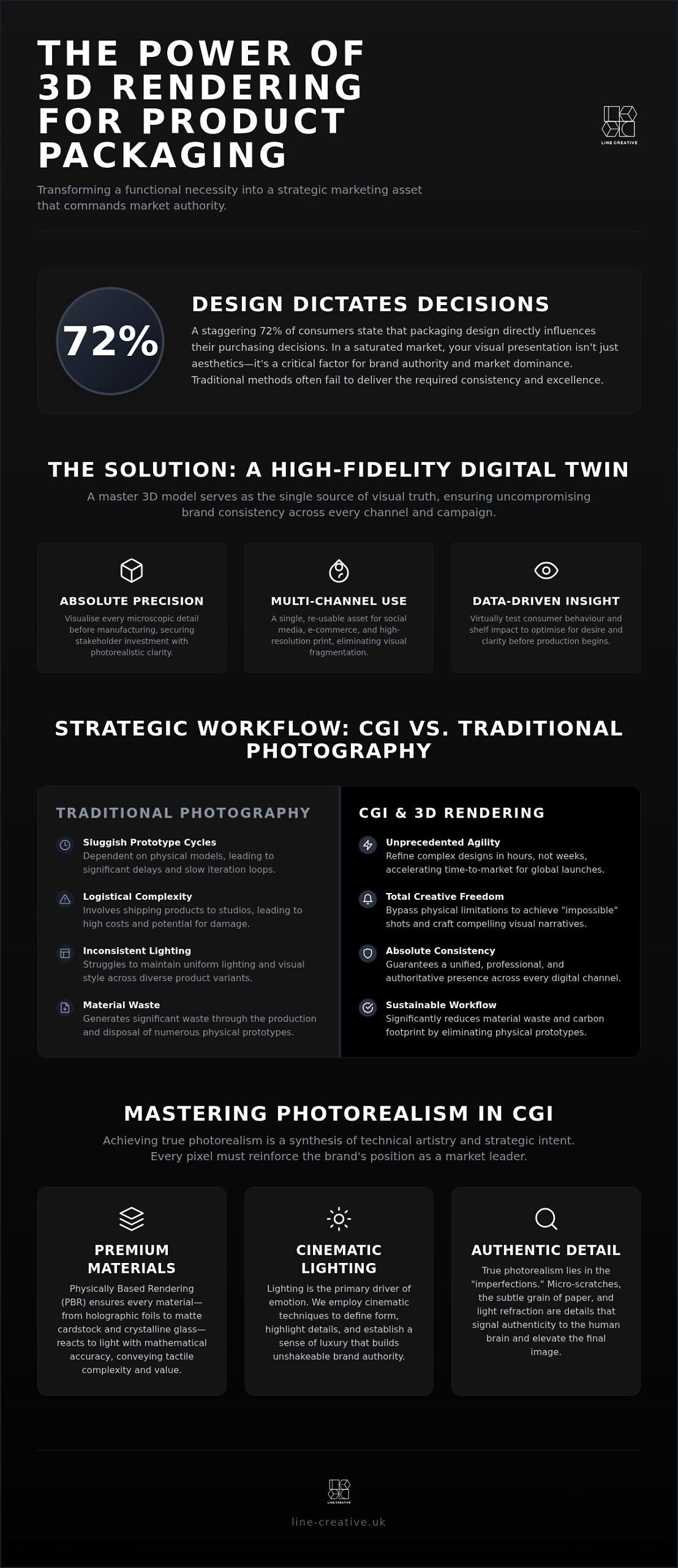
Strategic Workflow: CGI vs. Traditional Photography in 2026
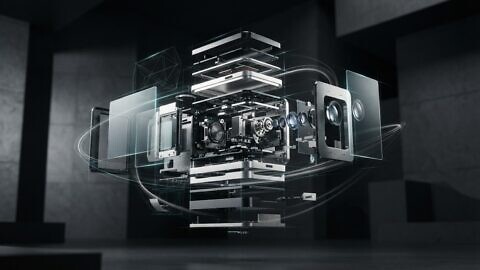
The divide between traditional photography and CGI has widened into a strategic chasm. Traditional shoots are burdened by physical constraints: shipping prototypes, hiring studios, and managing the volatility of natural light. Conversely, 3d rendering for product packaging offers absolute environmental control. You can manipulate camera angles, lighting intensity, and atmospheric conditions with surgical precision. This workflow enables “impossible” visualisations, such as complex exploded views or high-speed liquid simulations, that remain physically unattainable or prohibitively expensive in a traditional studio setting. For global brands managing hundreds of SKUs, the cost-effectiveness of CGI is undeniable; once a master model exists, generating dozens of colour and material variants takes hours, not days.
When to Choose CGI for Your Product Launch
For high-stakes launches, timing is everything. CGI allows you to generate high-impact marketing collateral months before the first physical unit leaves the factory. This proactive approach integrates perfectly with 3D product lifestyle rendering, placing your packaging in aspirational, photorealistic environments that resonate with your target demographic. When the success of a global campaign depends on pre-orders and early digital engagement, waiting for physical samples is a luxury your brand cannot afford. It’s a method that ensures your marketing machine is running at full capacity long before the product hits the shelves.
The Iteration Advantage: Perfecting the Design
Efficiency is the hallmark of a sophisticated digital workflow. Unlike photography, where a minor label change necessitates a full reshoot, 3D assets allow for real-time adjustments to colours, textures, and typography. This agility supports rigorous A/B testing, letting you validate packaging designs against consumer behaviour in digital marketplaces before committing to mass production. By removing the need for extensive post-production retouching and physical set builds, you significantly lower the total cost of ownership for your visual assets. To see how these workflows translate into commercial success, explore our latest product visualisations and discover the impact of precision CGI.
Elevating Brand Authority: The Line Creative Approach
Achieving aesthetic perfection in 3d rendering for product packaging requires more than access to high-end software; it demands a partner who understands the psychological weight of a brand’s visual identity. Line Creative operates as a strategic extension of your design team, prioritising a synthesis of storytelling and technical excellence. We don’t merely produce images. We engineer visual assets that safeguard your brand’s reputation and drive consumer desire through uncompromising quality. This collaborative partnership ensures that every design is granted a “real visual life” that resonates with stakeholders and customers alike.
Our methodology is built on a foundation of award-winning credibility. As a multiple CGarchitect Awards winner, our studio has refined the art of high-stakes visual communication to meet the demands of the world’s most discerning brands. We understand that at this level, there is no room for error. Every texture, reflection, and shadow must be intentional, serving to reinforce the narrative of luxury and reliability that your product represents.
A Trusted Partner for Global Design Leaders
The gravity of the projects we handle is reflected in our portfolio of elite collaborators. We are proud to be trusted by global design leaders, including Zaha Hadid Architects and Aman Resorts, where the stakes for visual communication are exceptionally high. Our premium and professional tone aligns with the expectations of clients who require absolute precision and long-term stability. If your next launch demands this level of strategic insight and technical mastery, we invite you to contact the studio for a consultation to discuss your specific requirements.
Disruptive Technology Meets Creative Flair
We leverage disruptive technologies to create immersive packaging experiences that traditional studios cannot replicate. By utilising tools like Unreal Engine, we offer an “Unreal Studio Experience” that allows for real-time interaction and exploration of your packaging designs. This story-centred approach ensures that our visuals do more than just show a product; they evoke an emotional response and project a sense of cutting-edge innovation. For a deeper understanding of how we maintain these rigorous benchmarks, explore our 3D Rendering: High-Stakes Visualisation Guide. This commitment to excellence ensures that your 3d rendering for product packaging isn’t just a technical requirement, but a definitive competitive advantage in a crowded global market.
Dominating the Digital Shelf with Precision CGI
The transition from physical prototyping to a digital-first visual strategy is no longer optional; it’s the definitive standard for brand authority. By leveraging high-end 3d rendering for product packaging, you ensure that every material, texture, and light source serves a specific strategic purpose. This methodology doesn’t just reduce time-to-market. It creates a permanent, re-usable foundation for global multi-channel consistency that safeguards your brand against information overload. You’ve seen how technical artistry and cinematic lighting can transform a simple container into a powerful marketing asset that commands attention.
Line Creative provides the technicality, storytelling, and strategic insight required by the world’s most discerning design leaders. As winners of multiple CGarchitect Awards and trusted partners to Zaha Hadid Architects and luxury hospitality brands, we specialise in photorealistic digital storytelling that transforms concepts into consumer desire. Secure your brand’s future by choosing a partner who understands the psychological impact of every pixel. Partner with an award-winning CGI studio for your next product launch and command the attention your design deserves. Your vision is ready for its real visual life.
Frequently Asked Questions
Is 3D packaging rendering better than traditional photography for e-commerce?
3d rendering for product packaging is superior for e-commerce due to its uncompromising consistency and scalability. Unlike traditional photography, which requires a physical set for every variant, CGI allows you to maintain identical lighting and camera angles across an entire product range. It eliminates the logistical nightmares of shipping prototypes and ensures your digital storefront looks professional and authoritative. This precision is a definitive safeguard against the visual fragmentation that often dilutes brand power.
How does 3D rendering help in the early stages of packaging design?
In the early stages, rendering serves as a strategic tool for virtual prototyping and stakeholder alignment. It allows design teams to visualise complex substrates and structural forms before committing to expensive manufacturing runs. By creating a digital twin early, you can test consumer behaviour and shelf impact virtually, which drastically reduces physical waste. This agile approach accelerates the iteration loop, ensuring that the final design is optimised for both aesthetic perfection and commercial success.
Can 3D renders accurately replicate specialty finishes like gold foil or embossing?
Our studio utilises Physically Based Rendering (PBR) to replicate the exact light-reflecting properties of specialty finishes. We can accurately simulate holographic foils, spot UV, matte varnishes, and intricate embossing with absolute photorealistic precision. This technical mastery ensures that the digital asset feels as tangible as the physical product. For luxury brands, this ability to showcase premium substrates is essential for communicating value and maintaining brand authority across all high-stakes marketing channels.
What is a “digital twin” in the context of product packaging?
A digital twin is a high-fidelity, master 3D model that acts as the single source of truth for your packaging design. It’s a permanent, re-usable asset that you can update for future iterations or seasonal campaigns without starting from scratch. This model serves as the foundation for all marketing visuals, from social media content to high-resolution print advertising. It ensures that your brand’s visual identity remains unified, stable, and evocative across every global digital touchpoint.
How long does a typical 3D packaging rendering project take for a global launch?
Timelines vary depending on the complexity of the project and the number of variants, but a typical workflow is significantly faster than traditional photography. For a global launch, initial visualisations can often be delivered within days, allowing for immediate stakeholder review. This speed is a critical competitive edge, as it enables the creation of marketing collateral whilst the physical product is still in production. It ensures your launch remains on schedule without compromising on visual excellence.
What technical files do I need to provide for a 3D packaging render?
To achieve the highest level of precision, we typically require structural dielines in PDF or Adobe Illustrator formats, along with high-resolution artwork files. If your packaging has complex geometry, providing CAD files like STEP or OBJ is ideal. We also request material specifications, such as Pantone colours or substrate samples, to ensure the 3d rendering for product packaging matches your physical output exactly. This data-driven approach guarantees a result that is both technically accurate and visually compelling.