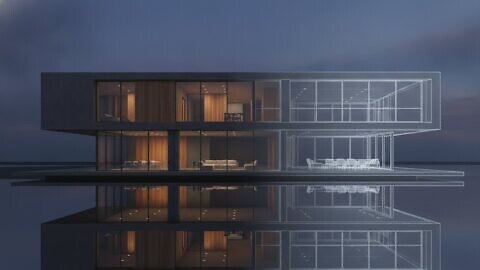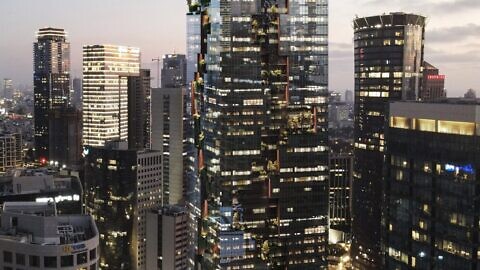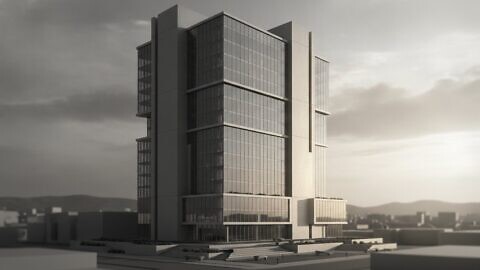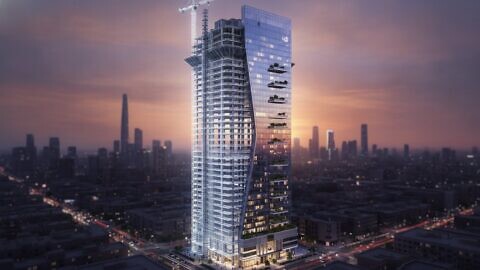
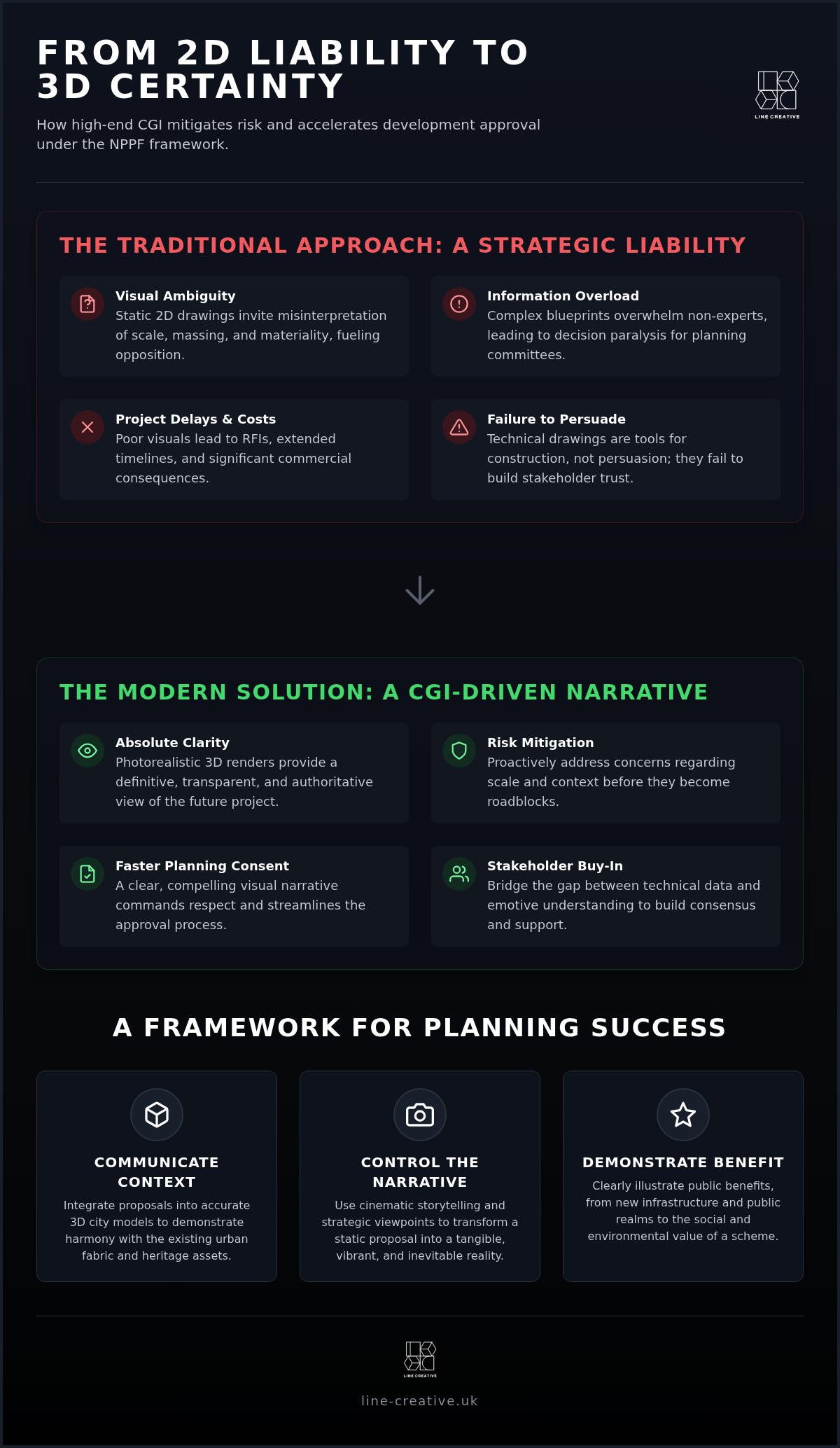
A traditional 2D site plan is no longer a blueprint for success; in today’s high-stakes development landscape, it’s a strategic liability that invites misinterpretation and avoidable delays. You understand that even the most ambitious mixed-use schemes can falter when planning committees or local residents fail to grasp the nuanced scale, material quality, or contextual harmony of a proposal. This ambiguity fuels opposition and extends approval timelines, often at a significant commercial cost to the developer.
By using CGI to demonstrate public benefit, you transform abstract architectural intent into a clear, authoritative, and persuasive narrative that commands respect. This article reveals how elite architectural visualisation and real-time rendering in Unreal Engine 5.8 mitigate development risks and secure faster planning consent under the NPPF 2026 framework. We will examine the precise methodology of high-end digital production, the necessity of rigorous Visual Impact Assessments, and the strategic deployment of cinematic storytelling to bridge the gap between complex technical data and emotive stakeholder buy-in. Discover how to leverage sophisticated, precise, and immersive imagery to safeguard your project’s future.
Key Takeaways
- Eliminate the visual ambiguity of traditional 2D drawings by adopting a 3D-first approach that prevents information overload and decision paralysis amongst planning committees.
- Master the art of using CGI to demonstrate public benefit by articulating the precise relationship between new structures and the existing urban fabric or heritage assets.
- Integrate high-end architectural visualisation into your early-stage workflow to transform ambitious concepts into a robust, risk-mitigated narrative for final submission.
- Recognise why the pedigree of your visualisation partner is a direct reflection of your project’s quality, ensuring long-term stability and commercial success for complex master-planning.
The Evolution of Planning Visualisation: Why 2D Drawings Are No Longer Sufficient
Traditional orthographic drawings are static artifacts. They demand a level of spatial literacy that most planning committee members simply don’t possess. When developers present complex, high-value master-plans through 2D plans alone, they invite information overload and decision paralysis. Under the NPPF 2026 framework, the margin for visual error has vanished. Ambiguity isn’t just a technical hurdle; it’s a catalyst for rejection.
Using CGI to demonstrate public benefit provides a definitive, immersive narrative that 2D sketches cannot match. By integrating proposals into accurate 3D city models, we provide stakeholders with a transparent, authoritative view of the future. This level of precision is vital for ambitious schemes on Grey Belt land or near well-connected stations where design, scale, and impact are under intense scrutiny.
Bridging the Gap Between Architect and Layperson
Blueprints are tools for construction, not persuasion. Elite 3D rendering and CGI translates technical data into a human-centric narrative that resonates with non-experts. It establishes a common visual language amongst architects, planners, and local residents. When stakeholders can witness how a design interacts with its immediate environment, friction during the consultation process dissolves. It’s about replacing scepticism with a shared, clear understanding.
The High Cost of Visual Ambiguity
Poor visuals are a strategic liability. Low-quality imagery often leads to misinterpretations of materiality and massing, resulting in costly Requests for Information (RFIs) or avoidable delays. For high-value mixed-use developments, missing a single planning committee date can carry immense financial consequences. Premium architectural visualisation is more than an aesthetic choice; it’s a form of insurance. It safeguards the project’s timeline by ensuring the narrative remains controlled, precise, and undeniably compelling.
CGI as a Risk Mitigation Tool: Communicating Scale, Massing, and Context
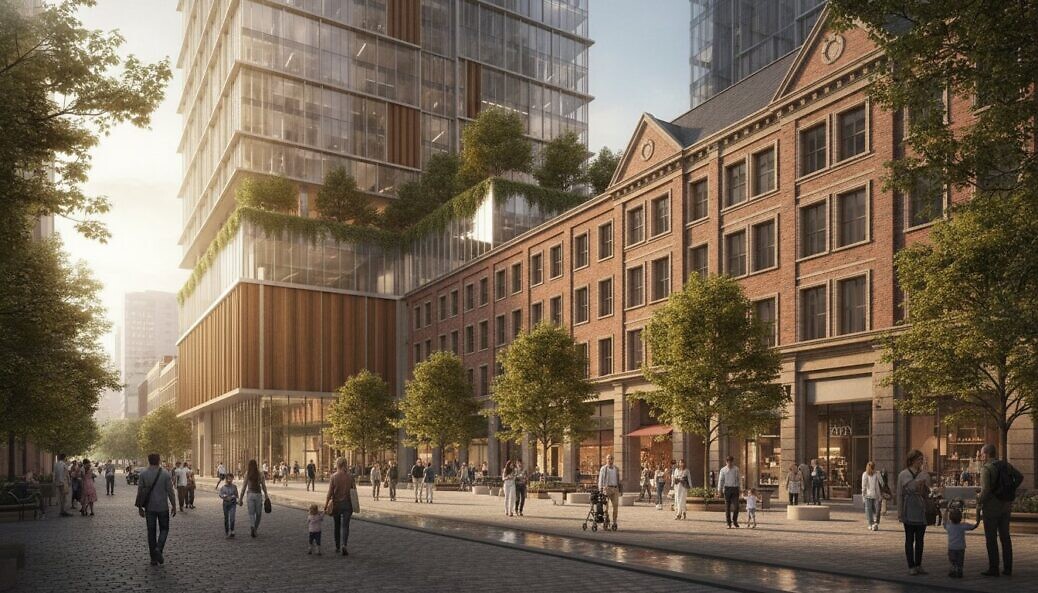
Strategic risk mitigation in planning requires more than just accuracy; it demands absolute clarity. When handling high-value mixed-use schemes, the primary challenge is often the perceived impact on the existing urban fabric. Using CGI to demonstrate public benefit allows developers to articulate complex master-planning with a level of precision that neutralises fear. Photorealistic 3D rendering provides the definitive proof of how a new structure respects heritage assets whilst introducing modern functionality. It is a methodology built on accuracy, transparency, and aesthetic excellence.
High-end CGI animation further elevates this narrative. By visualising the “life” of a development through varying times of day, different seasons, and changing light conditions, we remove the guesswork for planning committees. This visual evidence of materiality and light interaction is essential for satisfying stringent local design codes. It transforms a static proposal into a vibrant, tangible, and inevitable reality that feels integrated rather than intrusive. The goal is to provide a sophisticated, precise, and immersive experience that commands respect from every stakeholder.
Strategic Narrative Control in Planning
Control the narrative before opposition takes root. By proactively visualising a scheme from the most sensitive viewpoints, developers can address concerns regarding scale and massing before they become roadblocks. The role of architectural visualisation for mixed-use planning is to strike a sophisticated balance between grand master-planning and granular detail. This methodology ensures that public benefits, such as new infrastructure or enhanced public realms, are highlighted as the central pillars of the application. It is about presenting a vision that is as commercially viable as it is socially responsible.
Visualising the Invisible: Sustainability and Community Impact
Sustainability is often hidden within technical specifications, making it difficult for stakeholders to value. We use sophisticated 3D rendering to make these “invisible” benefits visible. From green roofs and solar integration to pedestrian-friendly zones, our visuals illustrate the social value and environmental stewardship of your design. Using CGI to demonstrate public benefit in this way ensures that ambitious projects are seen as realised assets by the local planning authority. It provides the psychological assurance that the development will enhance, rather than diminish, the local community’s quality of life.
For developers seeking to secure consent for complex international schemes, exploring our latest architectural portfolio demonstrates how we turn high-stakes vision into approved reality.
Integrating High-End Visuals into the Planning Workflow: A Consultant’s Framework
Strategic planning demands early intervention. Engaging a studio at the concept stage transforms CGI from a late-stage requirement into a powerful design-shaping tool. It allows for a rigorous feedback loop between architects and consultants, ensuring that every frame aligns with the technical constraints of the site. By engaging architectural visualisation services during the initial feasibility phase, developers secure visual assets that serve dual purposes: satisfying planning committees whilst simultaneously anchoring high-stakes investor presentations. This early-stage collaboration yields the most strategic visual assets, preventing the costly friction of late-stage design revisions.
There’s a critical distinction between competition-level imagery and planning-ready assets. Competition visuals prioritise atmospheric allure to win a bid. Submission visuals, however, must be defensible, precise, and grounded in real-world data. Using CGI to demonstrate public benefit requires this level of rigour. It ensures that proposed improvements to the public realm are not merely promised but are visually verified against the backdrop of the NPPF 2026 guidelines. With 46% of architecture firms already integrating AI into their visual workflows, the differentiator for elite schemes is the human-led strategic narrative that bridges technicality and persuasion.
The Role of Real-Time Rendering and Virtual Production
The shift towards real-time rendering, specifically using Unreal Engine 5.8, has redefined stakeholder engagement. This technology allows for immediate design adjustments and live reviews, effectively removing the “black box” of traditional rendering. By leveraging virtual production and AR/VR, developers can offer immersive walkthroughs that replace static uncertainty with interactive clarity. This transparency is the definitive solution to information overload, providing committees with a level of contextual transparency that builds immediate trust.
Documenting the Vision: Stills vs. Animation
Deciding between high-resolution stills and cinematic animation is a strategic choice based on project complexity. Stills are essential for documenting materiality, light interaction, and specific Visual Impact Assessment (VIA) viewpoints. Animation, however, is the superior tool for explaining complex pedestrian flows or traffic management within a master-plan. Using CGI to demonstrate public benefit through motion creates an emotional connection that sterile images cannot replicate, ensuring the design access statement is experienced rather than just read.
To integrate these strategic visual assets into your next submission, contact our London studio to discuss your project requirements.
Partnering with an Award-Winning Studio: Securing Consent through Story-Driven CGI
The calibre of your visual assets is a direct reflection of your project’s integrity. In high-stakes planning, the pedigree of your CGI partner isn’t just a detail; it’s a strategic endorsement. Regulators and high-net-worth investors seek the assurance of proven excellence. Line Creative brings this award-winning credibility to every submission. Having secured multiple CGarchitect Awards and the SME UK Award for innovative digital production, our studio acts as a definitive safeguard against visual ambiguity.
Elite firms like Zaha Hadid Architects, Olson Kundig, and Pick Architects trust us with their most complex international master-planning. Our portfolio demonstrates a unique ability to handle the gravity of these global schemes. By using CGI to demonstrate public benefit, we provide the technical rigour, creative flair, and strategic authority required to turn ambitious concepts into approved realities. We ensure your narrative remains controlled and persuasive throughout the consultation period.
A Collaborative Mindset for Ambitious Projects
We don’t function as a mere service provider. We are strategic partners. Our methodology combines technical precision, aesthetic perfection, and long-term stability to ensure your vision survives the scrutiny of the planning process. This collaborative mindset allows us to manage the intricate feedback loops between architects and consultants with ease. We share your goal: securing consent for designs that redefine urban landscapes. It’s a relationship built on joint creativity and consistently high-quality delivery.
The Final Push: From Planning to Marketing
The value of premium CGI extends far beyond the planning committee. Once consent is secured, our visual assets transition seamlessly into high-impact marketing materials. The ROI of using CGI to demonstrate public benefit is realised when these same assets accelerate property sales and pre-lets post-approval. Choosing a studio that understands the entire lifecycle of a development’s visual communication is an investment in commercial success. It ensures your project remains compelling, authoritative, and profitable from inception to completion.
Secure the future of your development. Contact Line Creative to discuss your next high-stakes planning application.
Mastering the Narrative of Approved Architecture
The path to planning consent for complex, mixed-use schemes is often obstructed by visual ambiguity and stakeholder scepticism. We’ve established that moving beyond traditional 2D plans to embrace sophisticated, story-driven architectural visualisation is no longer optional; it’s a strategic imperative. By using CGI to demonstrate public benefit, developers can articulate the nuanced value of their designs, from sustainable infrastructure to heritage integration, with absolute clarity. This precision doesn’t just reduce the risk of rejection; it accelerates the entire approval lifecycle and protects your commercial timeline.
Partnering with a studio that understands the gravity of these projects is the essential safeguard for your project’s success. As a multiple CGarchitect 3D Award winner trusted by world-leading firms like Zaha Hadid Architects, Line Creative specialises in the high-stakes world of complex international master-planning. We provide the technical rigour and creative excellence required to transform ambitious concepts into tangible, approved assets that committees can trust. Your next submission represents a significant investment. Ensure it’s supported by a visual narrative that commands respect.
Secure your next planning approval with award-winning CGI; contact Line Creative today.
Your vision deserves a partner who shares your commitment to excellence and secures the results your project demands.
Frequently Asked Questions
How does CGI help in the planning permission process for mixed-use developments?
CGI acts as a strategic instrument for risk mitigation by articulating complex master-planning through precise 3D rendering. It allows committees to visualise the relationship between new structures and the existing urban fabric, effectively neutralising objections based on perceived impact. By using CGI to demonstrate public benefit, developers provide a transparent narrative that supports the project’s social and environmental value, ensuring that ambitious designs are seen as realised assets rather than abstract concepts.
What is the difference between a standard render and a CGI for planning application?
Standard marketing renders often prioritise atmospheric allure and artistic license to attract buyers. In contrast, CGI for planning applications must be defensible, precise, and grounded in real-world data. These visualisations are built to withstand technical scrutiny, focusing on accurate materiality, light interaction, and contextual transparency. They serve as authoritative evidence within a planning statement, ensuring that the proposed development adheres to design codes whilst clearly communicating its strategic intent to regulators.
At what stage of the planning process should we engage a CGI studio?
Engaging a CGI studio during the initial concept or feasibility stage yields the most strategic visual assets. Early collaboration allows for a rigorous feedback loop between architects and visualisation consultants, ensuring that the design evolves in alignment with technical site constraints. This proactive approach transforms architectural visualisation from a late-stage requirement into a powerful tool for shaping the project narrative, securing investor buy-in, and identifying potential planning hurdles before they result in costly delays.
Can CGI animation be used to address community concerns during public consultations?
CGI animation is an exceptionally effective tool for bridging the gap between technical blueprints and community understanding. By visualising pedestrian flows, traffic management, and the “life” of a development through different seasons, motion creates an emotional connection that static images cannot replicate. Using CGI to demonstrate public benefit during consultations provides stakeholders with a clear, immersive experience of the proposed improvements, replacing scepticism with a shared understanding of how the project will enhance the local area.
How long does it typically take to produce high-quality CGI for a planning submission?
A typical suite of high-resolution stills and cinematic animations for a major mixed-use scheme generally requires several weeks of intensive production. This timeframe allows for the iterative feedback loops between architects and our studio that are essential for technical precision. The process involves comprehensive 3D modelling, lighting optimisation, and meticulous post-production to ensure every asset meets the authoritative standards required for a successful planning committee review.
Does Line Creative provide Verified View Montages for planning?
Line Creative does not provide Verified View Montages (VVMs) or architectural design services. Our studio specialises in premium visual communication through high-end 3D rendering, CGI animation, and immersive real-time walkthroughs. We act as a strategic partner for elite architectural firms, delivering the sophisticated digital assets and cinematic storytelling required to secure planning approvals and attract high-net-worth investment for complex, high-value international developments.